
CLICK TO SHOP OUR BLACK FRIDAY SALE!
*Excludes BioNude and subscriptions
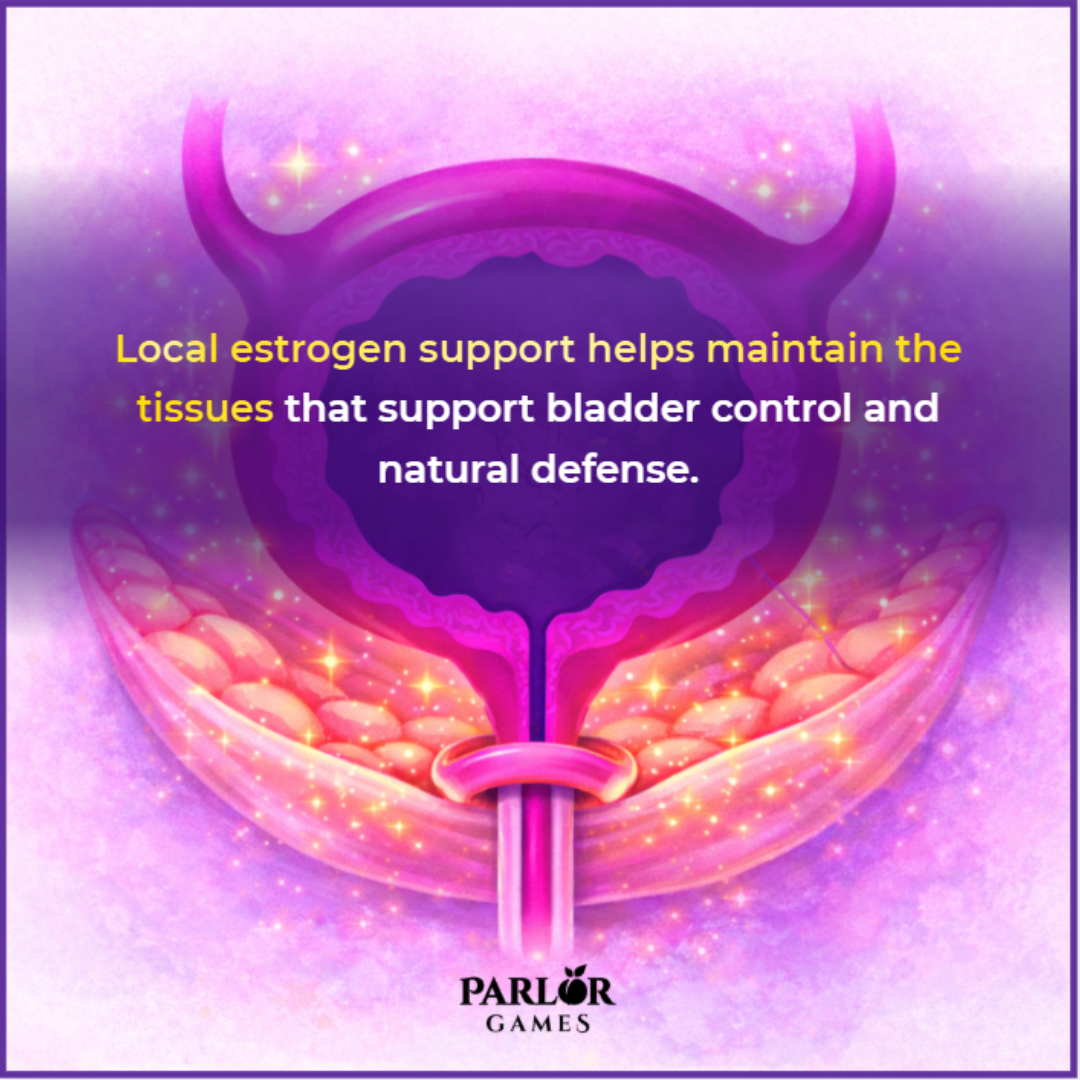
To really understand why this issue plagues post-menopausal women, we first need to understand the biology (and anatomy) of the bladder itself:
This nifty diagram shows a clearer picture of how all the various parts connect:

You probably won't be surprised to find out that estrogen plays a significant role in maintaining the health of intimate tissues. There are estrogen receptors located in the sphincter muscles, along the urethra, and around the bladder. Those receptors are there for a reason — estrogen is involved in keeping the muscles and the surrounding skin feeling comfortable and functioning well.
After menopause, when estrogen levels drop to very low levels, the lack of estrogen means that some of the cells in this area may not function as well as they used to. So what does that actually look like?
First — when muscles aren't as well-supported, it can be harder for them to maintain tone and control. Muscle-strengthening work is all on you; kegels are a key player when it comes to maintaining pelvic muscle health.
Second — let's talk about the skin that lines the urethra. When estrogen levels drop, the skin in this area can become thinner and less robust over time. With thinner, less-supported tissue, the skin may be more easily irritated, and the sides of the urethra can rub against each other and cause discomfort. Keeping the skin in this area healthy and comfortable matters — and that starts with understanding what's happening.
Regular rinsing and washing can become even more important as we get a little bit older. We have more folds in the skin, more hiding places for bacteria to set up shop, and our innate repair processes don't work as quickly as they used to. By all means use soap for cleaning around the anus to remove bacteria, but the vulva can often be safely rinsed with just water.
Let's also talk about collagen and connective tissue. Collagen is one of those substances in the body that helps hold everything in place — internal organs and skin in particular. We see the external effects of changing collagen levels as fine lines and softening begin to appear on our skin. The same thing is happening on the inside. As the collagen supporting the uterus, colon, and bladder gradually shifts, those organs may drift a little — which can increase the sensation of pressure and urgency in the pelvic area.
Estriol is associated with skin that looks and feels firmer and more supple over time, contributing to a softer, more comfortable appearance and feel in intimate areas.
Taking care of feminine skin and pelvic wellness is a meaningful investment in long-term comfort and confidence. Ladies — this issue doesn't magically reverse with time. If you plan to live into your 80s and 90s (and we fully plan to be there with you), let's plan to do that feeling your absolute best.
1. Kegels and other pelvic muscle training is a must — consistent, regular practice makes a real difference.
2. Maintain good hygiene for this tender area of your body — gentle rinsing, not over-cleaning.
3. Talk to your doctor about topical estradiol or estriol support for vaginal and vulvar skin hydration and comfort.
Because, let's face it — we didn't think Pampers were serious when they said their diapers really were for every stage, every age. We have other plans.

