
CLICK TO SHOP OUR BLACK FRIDAY SALE!
*Excludes BioNude and subscriptions
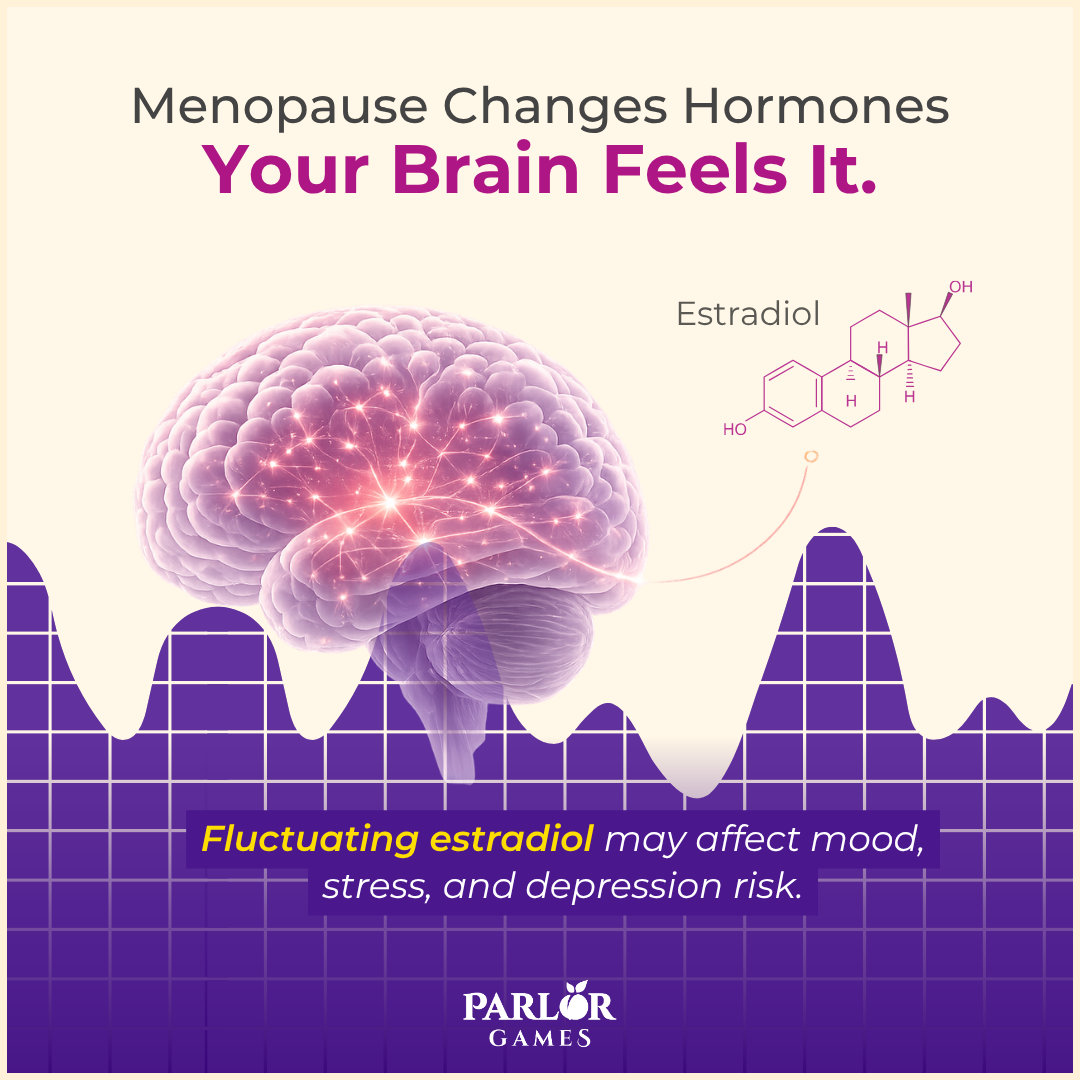
In "The Impact of Estradiol Dynamics During the Menopause Transition on Depression Risk: A Narrative Review of Estradiol's Neurobiological Mechanisms," Nathan and colleagues explore why mood changes become so common during perimenopause and menopause. The review argues that the issue is not simply "low estrogen," but the instability and fluctuation of estradiol levels during the menopause transition — and how those shifts affect the brain.
The authors note that many women notice changes in mood during perimenopause, with fluctuating hormones influencing mood regulation, stress resilience, cognition, and emotional processing. Rather than viewing estrogen as purely a reproductive hormone, the review highlights estradiol as an important neuroactive hormone involved in brain function and emotional stability.
The review explains that estradiol interacts with major neurotransmitters including serotonin, dopamine, norepinephrine, and GABA, all of which influence mood, anxiety, motivation, and sleep. According to the authors, fluctuating estradiol levels may destabilize these systems, helping explain why some women suddenly experience anxiety, irritability, panic, rage, low mood, or emotional turbulence during perimenopause.
Nathan and colleagues also discuss how estradiol affects brain regions involved in emotional regulation and stress response, including the amygdala, hippocampus, and prefrontal cortex. Importantly, the brain appears especially sensitive to rapid hormonal shifts rather than simply low hormone levels alone.
The review further highlights estradiol's role in neuroplasticity, synapse formation, inflammation regulation, and brain energy metabolism. When estradiol fluctuates unpredictably, these systems may become less efficient, contributing not only to shifts in mood but also to brain fog, poor stress tolerance, sleep disruption, and cognitive changes commonly reported during menopause.
A major theme of the review is the connection between estradiol and the stress response system, particularly the Hypothalamic-Pituitary-Adrenal Axis. The authors explain that estradiol normally helps regulate cortisol signaling and inflammatory activity within the brain. During the menopause transition, fluctuating estrogen levels may increase stress sensitivity while reducing resilience to stress.
The review also discusses growing evidence linking inflammation to changes in mood and emotional wellbeing. Because estradiol has anti-inflammatory effects within the nervous system, unstable hormone levels may contribute to increased neuroinflammation, potentially affecting emotional resilience further.
Nathan and colleagues discuss evidence suggesting that hormone therapy during the menopause transition may support more stable mood in some women, particularly by stabilizing hormonal fluctuations. However, they emphasize that women vary greatly in their sensitivity to hormonal change, meaning some individuals may be far more vulnerable to emotional shifts than others.
Overall, the review reinforces that perimenopausal mood changes are not simply a matter of "stress," "aging," or emotional weakness. They reflect measurable neurobiological changes occurring during one of the brain's most significant hormonal transitions.
You can view the full study here: https://www.sciencedirect.com/science/article/abs/pii/S0006322326000569
Parlor Games products are not intended to treat, cure, prevent, or mitigate disease or other medical conditions. Our products are not the subject of the studies discussed herein, and we do not claim that our products will have the same effects as those discussed in these articles. This information is being provided for educational purposes only, and is not intended to replace the advice of a medical professional.

Lorem ipsum dolor sit amet, consectetur adipiscing elit.
Lorem ipsum dolor sit amet, consectetur adipiscing elit.
Lorem ipsum dolor sit amet, consectetur adipiscing elit.
Lorem ipsum dolor sit amet, consectetur adipiscing elit.
Disclaimer: The information provided above is intended for educational and informational purposes only. Statements made have not been evaluated by the FDA nor are they intended to treat or diagnose. Any health concerns should be discussed and evaluated by your primary health care provider.
Parlor Games, LLC ● kate@parlor-games.com ● 5304 River Rd N Ste B ● Keizer OR 97303
Disclaimer: The information provided above is intended for educational and informational purposes only. Statements made have not been evaluated by the FDA nor are they intended to treat or diagnose. Any health concerns should be discussed and evaluated by your primary health care provider.
OUR HAPPINESS GUARANTEE
We want you to feel safe and confident trying any of our products. That's why we promise a 100% money-back guarantee on the purchase price of the first bottle of any of our products. Finding your balance takes time — so please give it a full 28 days. If after 28 days you're unhappy, or it just wasn't the right fit, simply contact us and we'll process a full refund of your purchase price upon receipt. Shipping fees are not refundable.
