
CLICK TO SHOP OUR BLACK FRIDAY SALE!
*Excludes BioNude and subscriptions
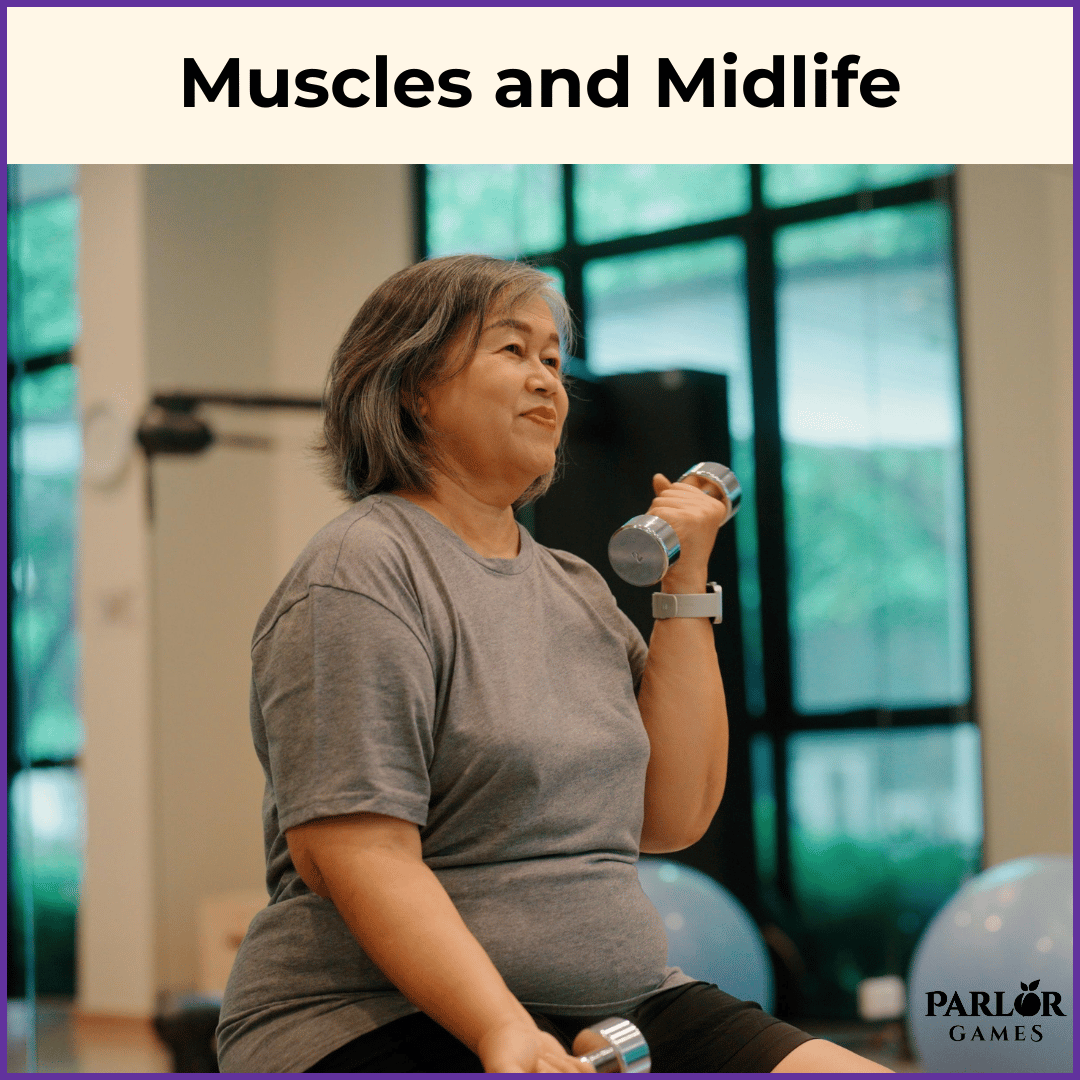
Muscle changes in midlife are real — and they're not just about skipping workouts. Hormones play a behind-the-scenes role in how muscle fibers grow, recover, and hold their strength as we age. A 2021 review in Frontiers in Medicine examined how declining sex hormones — including DHEA (dehydroepiandrosterone), estrogen, testosterone, and progesterone — are associated with changes in muscle mass and strength over time.
Muscle changes in midlife aren't just about skipping workouts. The process is complex and multi-factor — tied to shifts in the nervous system, inflammation, mitochondrial function, nutrition, and, critically, hormonal changes. A 2021 review in Frontiers in Medicine highlights that sex-steroid hormones directly influence how muscle metabolizes energy, repairs itself, and regenerates over time.
Muscle cells have receptors for both androgens (like testosterone) and estrogens. When hormone levels fall, the signals that tell muscle fibers to grow and recover weaken. This affects the protein synthesis pathways involved in building and maintaining lean mass. The result: slower recovery, reduced strength, and over time, changes in mobility and physical independence.
DHEA serves as a precursor hormone, converted by tissues into active estrogens and androgens. The review notes that DHEA appears to be involved in mitochondrial energy function and may help regulate inflammation inside muscle cells — though the evidence here is more limited than for testosterone and estrogen research specifically. Some small trials suggest that DHEA supplementation is associated with modest changes in muscle function when paired with exercise, but results have been inconsistent across studies.
The authors of the review are clear: no hormonal approach — including DHEA — has been established as a standalone solution for midlife muscle changes. Exercise, adequate protein, and sufficient sleep remain the foundation of maintaining physical strength and vitality. The paper calls for large, controlled clinical trials to better understand who might benefit from hormonal support, what approaches are safe, and how best to combine them with lifestyle interventions.
According to this Frontiers review, hormonal changes — especially declining DHEA and other sex steroids — play a meaningful but partial role in how muscle responds to aging. Hormonal support may be one piece of the puzzle, but the research consistently points back to training, nutrition, and recovery as the core of the picture.
Parlor Games products are not intended to treat, cure, prevent, or mitigate disease or other medical conditions. Our products are not the subject of the studies discussed herein, and we do not claim that our products will have the same effects as those discussed in these articles. This information is being provided for educational purposes only, and is not intended to replace the advice of a medical professional.

Lorem ipsum dolor sit amet, consectetur adipiscing elit.
Lorem ipsum dolor sit amet, consectetur adipiscing elit.
Lorem ipsum dolor sit amet, consectetur adipiscing elit.
Lorem ipsum dolor sit amet, consectetur adipiscing elit.
Disclaimer: The information provided above is intended for educational and informational purposes only. Statements made have not been evaluated by the FDA nor are they intended to treat or diagnose. Any health concerns should be discussed and evaluated by your primary health care provider.
Parlor Games, LLC ● kate@parlor-games.com ● 5304 River Rd N Ste B ● Keizer OR 97303
Disclaimer: The information provided above is intended for educational and informational purposes only. Statements made have not been evaluated by the FDA nor are they intended to treat or diagnose. Any health concerns should be discussed and evaluated by your primary health care provider.
OUR HAPPINESS GUARANTEE
We want you to feel safe and confident trying any of our products. That's why we promise a 100% money-back guarantee on the purchase price of the first bottle of any of our products. Finding your balance takes time — so please give it a full 28 days. If after 28 days you're unhappy, or it just wasn't the right fit, simply contact us and we'll process a full refund of your purchase price upon receipt. Shipping fees are not refundable.
