
CLICK TO SHOP OUR BLACK FRIDAY SALE!
*Excludes BioNude and subscriptions
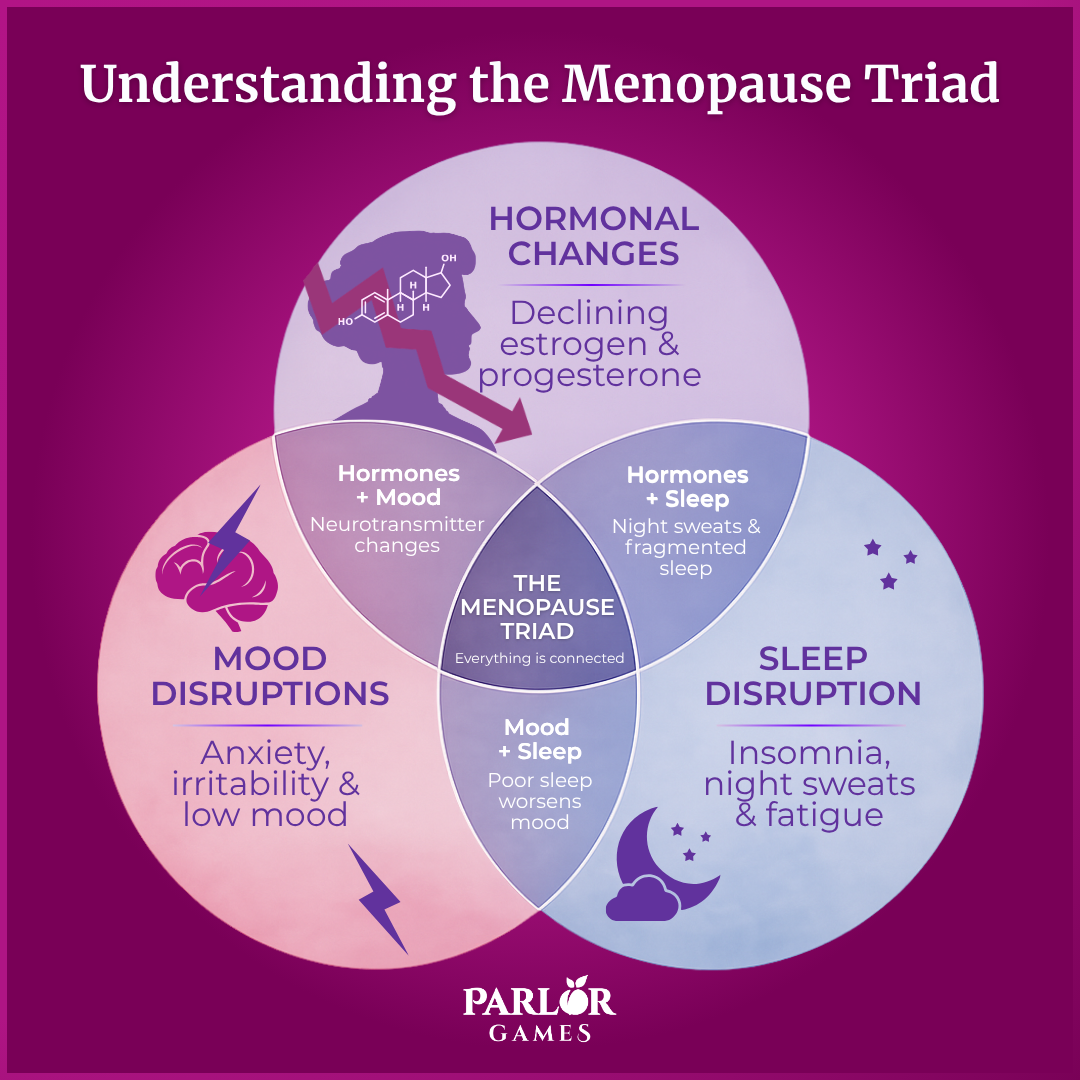
In what might be the best titled piece of menopause research on the internet - these researchers look at what factors influence menopause for most women. Now, you hear dark triad - you think psychological dysfunction - but it turns out Abbas et al., have things much more accurate - the real dark triad is for women in menopause and includes hormones, mood swings, and of course sleep. Let's take a look at what they found out...
In “Hormonal Changes, Mood Disturbances, and Sleep: Understanding the Triad in Menopausal Women,” Abbas et al., examine menopause as far more than “just hormones.” The paper explores how declining estrogen and progesterone alter neurotransmitters such as serotonin, dopamine, and gamma-aminobutyric acid (GABA), helping explain why so many women suddenly find themselves lying awake at 3 a.m., sweating through pajamas, irrationally enraged by dishwasher sounds, and wondering if they are somehow “failing at coping.”
Drawing from clinical and neuroendocrine research on menopausal women, Abbas and colleagues connect hormonal decline with increased rates of anxiety, depressive symptoms, insomnia, fatigue, and cognitive complaints. The authors describe sleep disruption and mood disturbance as a tightly linked feedback loop. Hot flashes and night sweats fragment sleep architecture, while poor sleep itself worsens emotional regulation, stress tolerance, and cognitive performance.
The article also discusses hypothalamic-pituitary-adrenal (HPA) axis activation and elevated cortisol as contributing factors, particularly in women already under chronic stress or with prior psychological vulnerability. Importantly, the authors argue that insomnia, mood instability, and vasomotor symptoms should not be treated as isolated problems because they arise from overlapping hormonal and neurological mechanisms.
Overall, the paper supports a multidimensional treatment approach that may include hormone therapy, cognitive behavioral therapy, exercise, stress reduction, and sleep-focused interventions. Abbas ultimately reinforces a growing body of evidence showing that menopause is as much a brain and nervous system transition as it is an ovarian one, which honestly explains a lot.
You can view the full study here: https://www.researchgate.net/publication/392310501_Hormonal_Changes_Mood_Disturbances_and_Sleep_Understanding_the_Triad_in_Menopausal_Women
Parlor Games products are not intended to treat, cure, prevent, or mitigate disease or other medical conditions. Our products are not the subject of the studies discussed herein, and we do not claim that our products will have the same effects as those discussed in these articles. This information is being provided for educational purposes only, and is not intended to replace the advice of a medical professional.

Lorem ipsum dolor sit amet, consectetur adipiscing elit.
Lorem ipsum dolor sit amet, consectetur adipiscing elit.
Lorem ipsum dolor sit amet, consectetur adipiscing elit.
Lorem ipsum dolor sit amet, consectetur adipiscing elit.
Disclaimer: The information provided above is intended for educational and informational purposes only. Statements made have not been evaluated by the FDA nor are they intended to treat or diagnose. Any health concerns should be discussed and evaluated by your primary health care provider.
Parlor Games, LLC ● kate@parlor-games.com ● 5304 River Rd N Ste B ● Keizer OR 97303
Disclaimer: The information provided above is intended for educational and informational purposes only. Statements made have not been evaluated by the FDA nor are they intended to treat or diagnose. Any health concerns should be discussed and evaluated by your primary health care provider.
OUR HAPPINESS GUARANTEE
We want you to feel safe and confident trying any of our products. That's why we promise a 100% money-back guarantee on the purchase price of the first bottle of any of our products. Finding your balance takes time — so please give it a full 28 days. If after 28 days you're unhappy, or it just wasn't the right fit, simply contact us and we'll process a full refund of your purchase price upon receipt. Shipping fees are not refundable.
