
CLICK TO SHOP OUR BLACK FRIDAY SALE!
*Excludes BioNude and subscriptions
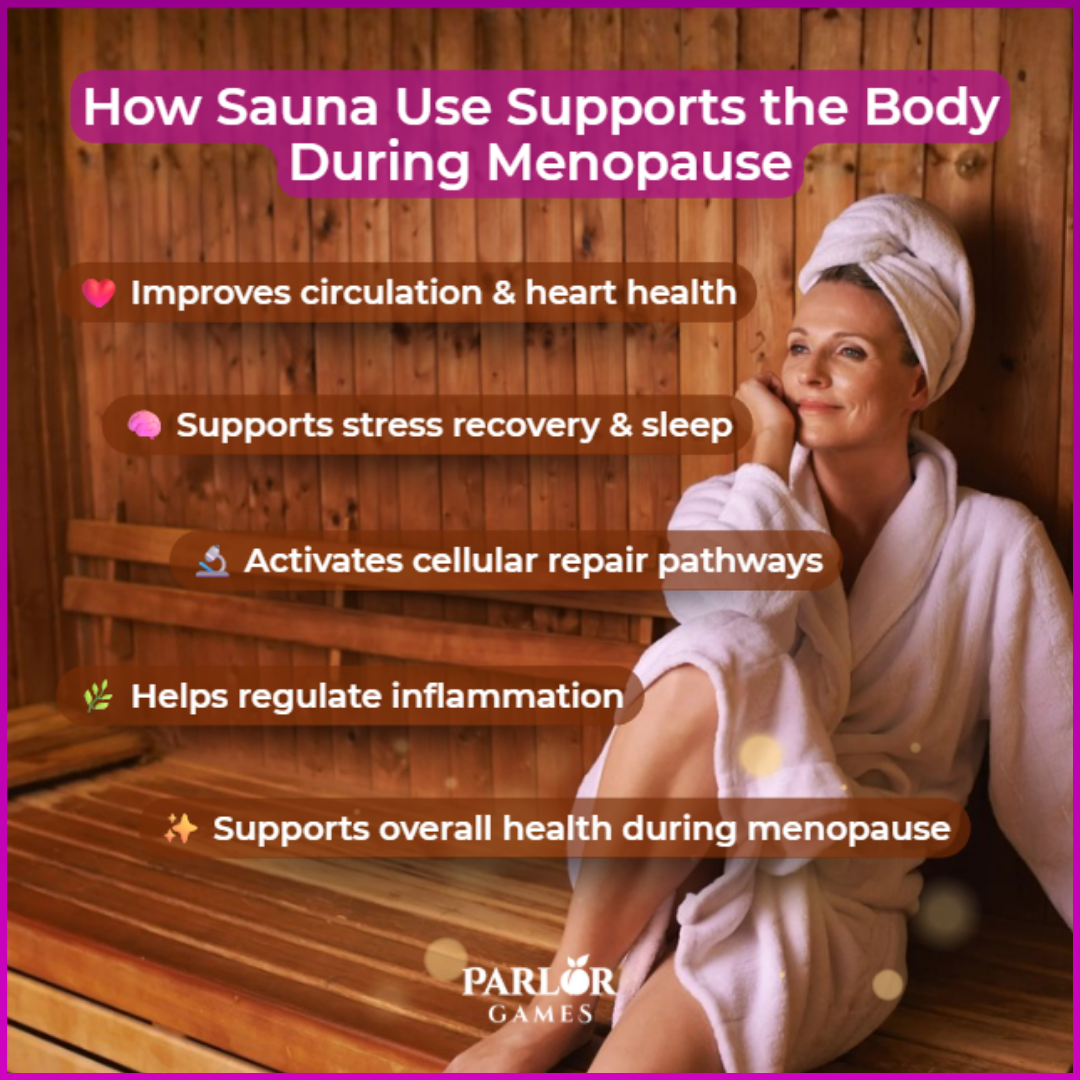
Saunas have long been associated with relaxation and cultural tradition, but the scientific interest in sauna use has grown rapidly over the last decade. In the review The Impact of Sauna on Health, Dudzik et al., examine existing research on sauna bathing to clarify what heat exposure actually does to the body and which health outcomes are most consistently supported by evidence.
Sauna culture has been around for centuries — but the science catching up to it is genuinely worth knowing about. The authors of this review focus on cardiovascular function, stress regulation, inflammation, and long-term health outcomes. Many of these areas are particularly relevant during menopause, when hormonal changes shift how the body responds to stress, circulation, and repair.
You can find the full article here: https://apcz.umk.pl/JEHS/article/view/49430
One of the strongest conclusions in the review relates to cardiovascular health. The authors note that sauna bathing produces physiological responses similar to moderate physical exercise. Heart rate increases, blood vessels dilate, and blood flow improves during heat exposure.
As discussed in the review, repeated sauna use has been associated with lower blood pressure, improved vascular function, and reduced arterial stiffness. The authors highlight evidence linking frequent sauna bathing with a lower risk of cardiovascular disease and cardiovascular-related mortality.
This finding is especially worth noting in the context of menopause, when declining estrogen is associated with increased cardiovascular risk and reduced vascular flexibility.
The review also discusses the impact of sauna use on mental health and stress physiology. According to the authors, heat exposure activates the sympathetic nervous system briefly, followed by a parasympathetic rebound once the session ends. This pattern is associated with relaxation and nervous system regulation.
The authors report that regular sauna use is associated with reductions in perceived stress, anxiety, and depressive symptoms. Improved sleep quality and endorphin release are proposed mechanisms contributing to these effects.
For women navigating sleep disruption, heightened stress reactivity, and mood changes during menopause, this nervous system modulation is particularly relevant.
As noted in the review, sauna bathing induces heat stress that activates protective cellular pathways, including the production of heat shock proteins. These proteins play a role in cellular repair, inflammation control, and resilience to physiological stress.
The authors describe evidence suggesting that regular sauna use may be associated with reductions in chronic low-grade inflammation. Since inflammation tends to increase during menopause due to hormonal shifts and metabolic changes, this mechanism may offer meaningful general wellness benefits.
The review highlights large observational studies linking frequent sauna use with improved quality of life and reduced all-cause and cardiovascular mortality. While the authors emphasize that sauna bathing should not be viewed as a standalone intervention, they describe it as a valuable lifestyle practice that supports multiple systems simultaneously.
The review also notes that sauna use is generally considered safe for healthy individuals when hydration is maintained and alcohol is avoided, while recommending medical guidance for individuals with certain cardiovascular conditions.
As outlined in this review, many of the physiological areas studied in sauna research overlap with systems affected by estrogen changes during menopause — including vascular health, stress regulation, inflammation, and cellular resilience.
The findings summarized by Dudzik and colleagues suggest that regular sauna use may be a worthwhile lifestyle consideration during this transition. As with any health practice, individual circumstances vary — a conversation with your healthcare provider is always a good starting point.
This article is for educational and general wellness purposes only. It is not medical advice and is not intended to diagnose, treat, cure, or prevent any disease. If you are noticing changes in your body or have questions about your health, please consult a knowledgeable healthcare provider.
Parlor Games products are not intended to treat, cure, prevent, or mitigate disease or other medical conditions. Our products are not the subject of the studies discussed herein, and we do not claim that our products will have the same effects as those discussed in these articles. This information is being provided for educational purposes only, and is not intended to replace the advice of a medical professional.

Lorem ipsum dolor sit amet, consectetur adipiscing elit.
Lorem ipsum dolor sit amet, consectetur adipiscing elit.
Lorem ipsum dolor sit amet, consectetur adipiscing elit.
Lorem ipsum dolor sit amet, consectetur adipiscing elit.
Disclaimer: The information provided above is intended for educational and informational purposes only. Statements made have not been evaluated by the FDA nor are they intended to treat or diagnose. Any health concerns should be discussed and evaluated by your primary health care provider.
Parlor Games, LLC ● kate@parlor-games.com ● 5304 River Rd N Ste B ● Keizer OR 97303
Disclaimer: The information provided above is intended for educational and informational purposes only. Statements made have not been evaluated by the FDA nor are they intended to treat or diagnose. Any health concerns should be discussed and evaluated by your primary health care provider.
OUR HAPPINESS GUARANTEE
We want you to feel safe and confident trying any of our products. That's why we promise a 100% money-back guarantee on the purchase price of the first bottle of any of our products. Finding your balance takes time — so please give it a full 28 days. If after 28 days you're unhappy, or it just wasn't the right fit, simply contact us and we'll process a full refund of your purchase price upon receipt. Shipping fees are not refundable.
