
CLICK TO SHOP OUR BLACK FRIDAY SALE!
*Excludes BioNude and subscriptions
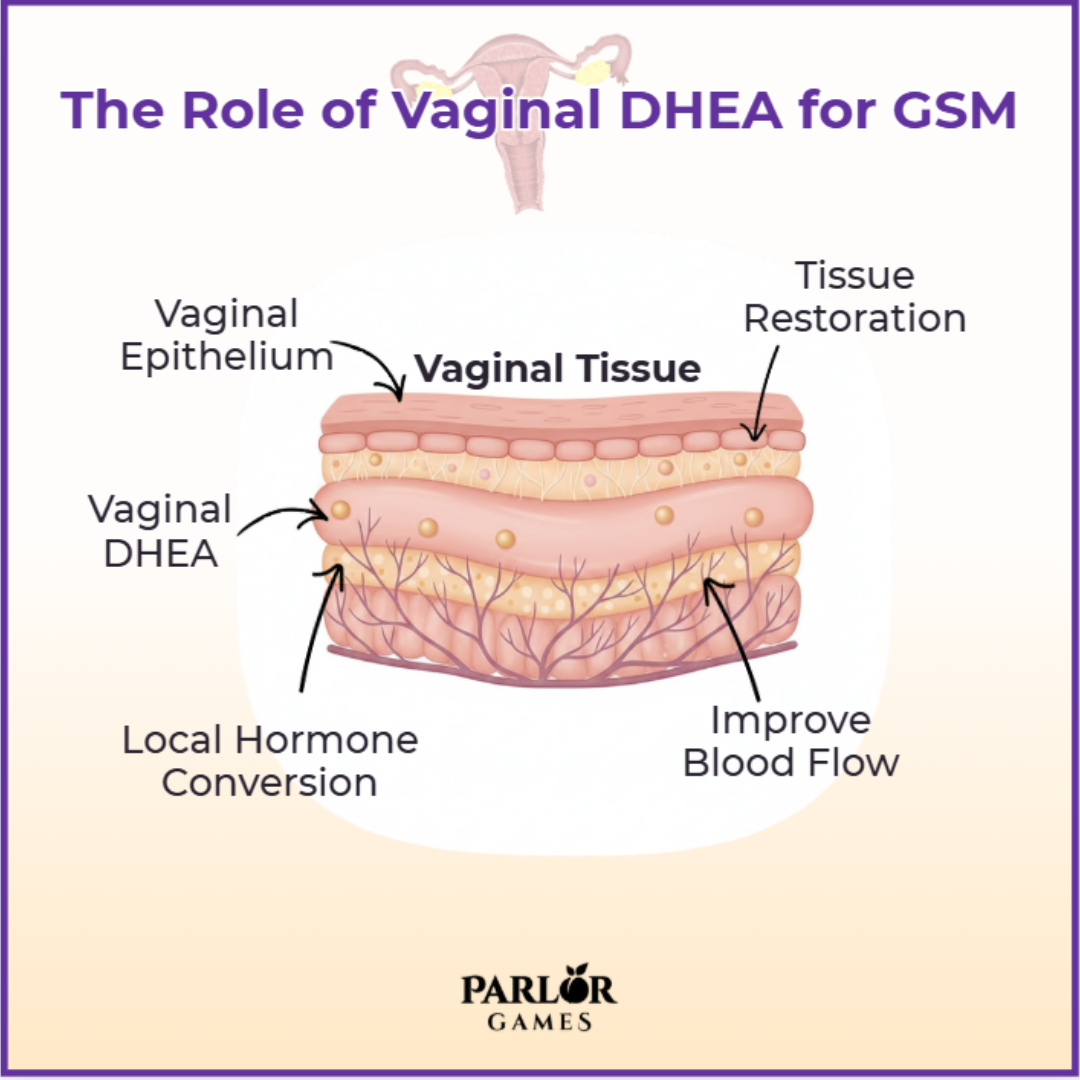
A group of Swiss menopause experts came together to review the science on vaginal DHEA (also called prasterone) and to give clear, practical guidance on how it can be used to treat Genitourinary Syndrome of Menopause (GSM).
GSM includes vaginal dryness, irritation, urinary discomfort, and painful sex caused by low estrogen after menopause. Many women struggle with these symptoms for years without getting proper treatment.
Research shows that using vaginal DHEA daily improves:
In short: it helps rebuild and restore the tissue, not just soothe the symptoms.
DHEA is converted within the cells into small amounts of estrogen and androgen right where it’s needed. Because this activity stays mostly local, systemic blood levels of hormones remain very low. This makes DHEA a helpful option for women who want to avoid systemic hormone therapy.
The consensus emphasizes that:
The goal is individualized care, not a one-size-fits-all solution.
Even though several safe and effective therapies exist, many women never receive treatment for GSM.
The experts created tools (guidelines, an algorithm, and patient information sheets) to help doctors talk about GSM more comfortably and recommend appropriate options.
DHEA is different from simple lubricants or moisturizers because it changes the health of the tissue itself. By improving the thickness, elasticity, moisture, and blood flow of the vaginal walls, DHEA helps address the root cause of GSM: low estrogen and androgen activity inside the vaginal cells.
ReBounce DHEA offers support upstream, meaning it helps the whole hormonal system rather than acting only inside the vaginal tissue. While vaginal prasterone works locally to rebuild the vaginal lining, ReBounce is designed to gently replenish systemic DHEA levels, which naturally decline with age. Because DHEA is a precursor hormone, restoring it can support the body’s ability to produce downstream hormones(including estrogen and testosterone) in small, physiologic amounts. This can complement vaginal therapies by supporting mood, energy, libido, and overall hormonal balance, while still remaining far milder than full hormone replacement therapy. For women experiencing both GSM and whole-body symptoms of low DHEA (fatigue, low resilience, low libido), ReBounce can serve as a broader-support option alongside, or independent from, localized vaginal treatments - please note ReBounce is designed to be used topically on thin skin (i.e., inner arms, behind the knees) rather than vaginally.

Lorem ipsum dolor sit amet, consectetur adipiscing elit.
Lorem ipsum dolor sit amet, consectetur adipiscing elit.
Lorem ipsum dolor sit amet, consectetur adipiscing elit.
Lorem ipsum dolor sit amet, consectetur adipiscing elit.
Disclaimer: The information provided above is intended for educational and informational purposes only. Statements made have not been evaluated by the FDA nor are they intended to treat or diagnose. Any health concerns should be discussed and evaluated by your primary health care provider.
Parlor Games, LLC ● kate@parlor-games.com ● 5304 River Rd N Ste B ● Keizer OR 97303
Disclaimer: The information provided above is intended for educational and informational purposes only. Statements made have not been evaluated by the FDA nor are they intended to treat or diagnose. Any health concerns should be discussed and evaluated by your primary health care provider.
28 Day Challenge Subscription Details

We ship you a 28 day supply of Silky Peach Cream for only $29 (more than 25% off our normal price) when you sign up for Subscribe & Save.
Follow the directions we include in the package and apply Silky Peach cream on your tender bits for 28 days.

Decision Day:
5 days before your subscription rebills, we’ll send you an email reminder with a link. If you decide Silky Peach is nice but not your thing… you can click that link and cancel your subscription without even talking to anyone. No hassle — no questions asked.
If you are like 72% of our Silky Peach customers, you’ll love it and can't imagine life without it. In that case, do nothing, and we’ll welcome you to the Parlor Games family and ship Silky Peach Cream to your door step every month for the same discounted price of $29 — locked in for as long as you remain a subscriber.

Important note about our easy-breezy subscriptions:
We know that some companies make it hard to cancel a subscription — that’s not us. Our mission is to save the world — one vagina at a time! If you decide you don’t need Estriol as an ongoing solution for dryness, incontinence, UTIs and keeping sex fun and comfortable again, we understand. Five days before we ship your next order, you'll receive an email with a link to cancel right there in the message.
No hunting, no searching, we got you. Respect is where it’s at.
FYI – Estriol is beneficial for skin integrity and mucous membranes. It’s great for vaginal atrophy and also amazing for use on the face and neck. Applying a small amount — about 1 pump — can help build the collagen and plump up the cells to reduce wrinkles. Who knew!!
OUR HAPPINESS GUARANTEE
We want you to feel safe and confident trying any of our products. That's why we promise 100% money-back guarantee on the purchase price of the first bottle of any of our products. Balancing hormones DOES take some time, so please try it for 28 days. If after 28 days you are unhappy, or the product just hasn't worked for you, simply contact us and we'll process a refund of your full purchase price upon receipt. Sorry, shipping fees are not refundable.
