
CLICK TO SHOP OUR BLACK FRIDAY SALE!
*Excludes BioNude and subscriptions
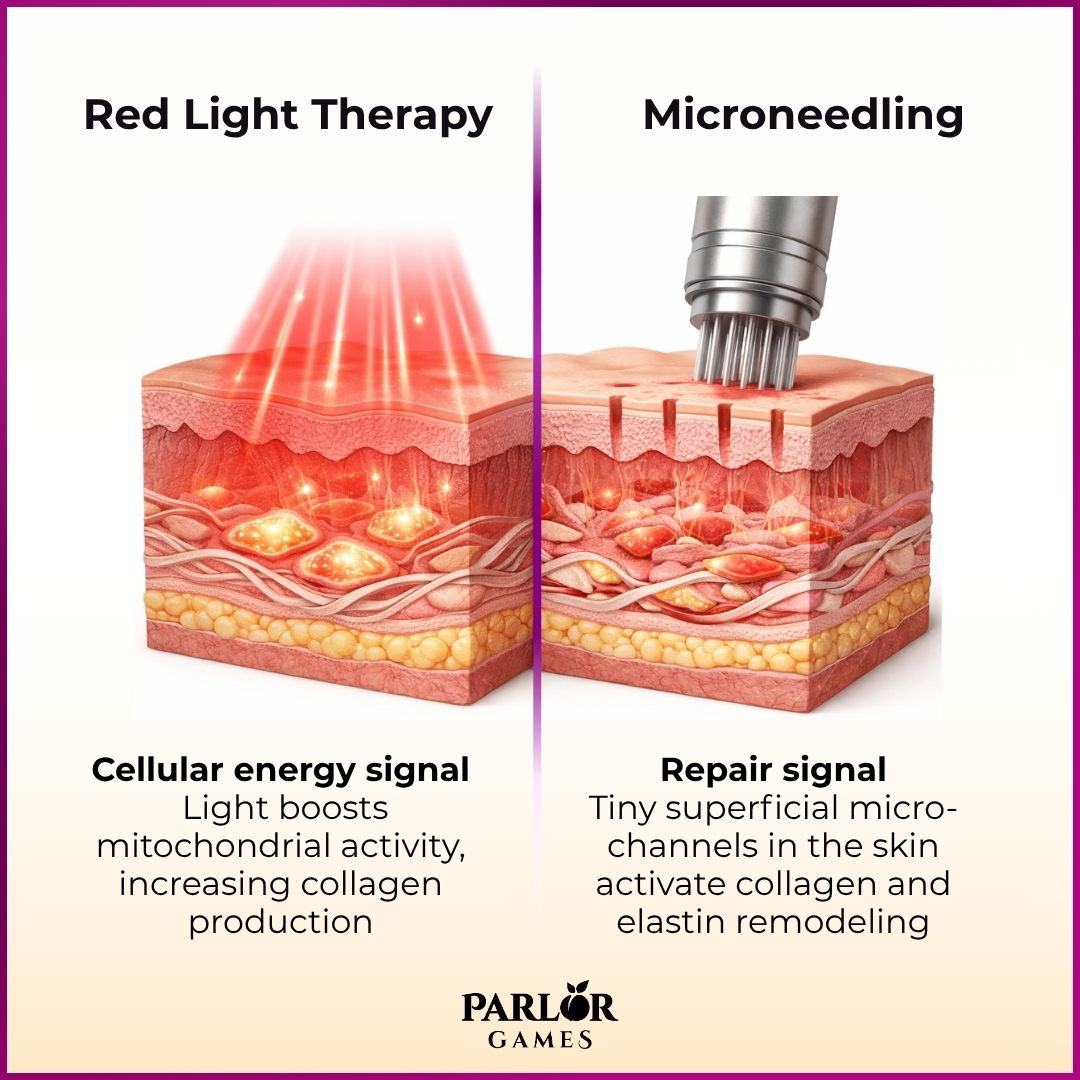
These articles look at how the skin can be encouraged to make more collagen, but they examine two very different methods.
The LLLT paper studies how specific red and near-infrared light wavelengths boost the energy inside skin cells and help fibroblasts make more collagen. The microneedling paper, on the other hand, looks at how tiny controlled injuries trigger the skin’s natural repair process, which also leads to new collagen and elastin. Together, these studies show that light and mechanical stimulation can both improve the skin, even though they work through completely different biological pathways.
This review looks at how low-level light therapy (LLLT) — also called red-light therapy — may visibly improve skin texture, support collagen, and help skin look more youthful when used consistently.
The key takeaway is that not all light wavelengths or treatment settings are equally effective. As devices flood the market — from wands to masks — it's helpful to know what the research actually says (and why!).
The review notes:
LLLT follows a "Goldilocks curve":
The research highlights that getting both the wavelength and the exposure level right is what separates devices that produce noticeable results from those that don't. Session frequency in studies typically involved a few sessions per week over several weeks for cumulative visible improvement.
The paper notes associations between optimized LLLT and the appearance of:
Red-light therapy appears to work best when the right wavelengths and exposure levels are used consistently. When optimized, LLLT is a non-invasive approach to supporting the skin's natural collagen activity and helping skin look more youthful over time.
This article explains how microneedling uses controlled micro-stimulation of the skin to engage its natural repair process — ultimately supporting collagen, elastin, and overall skin quality. Microneedling has become incredibly popular in both spa and medical-grade facials, as well as at-home treatments that vary greatly in quality...
Using fine needles, microneedling creates thousands of tiny, superficial micro-channels in the skin. In response, the body activates:
Over several weeks, this is associated with:
The article highlights evidence supporting visible improvements in:
Microneedling is a well-researched, accessible collagen-supporting approach with broad cosmetic applications — from the look of scars to the appearance of fine lines — because it works with the skin's own natural healing ability and minimal visible downtime.
Both methods have become increasingly popular as "collagen-boosting" treatments, especially with the rise of at-home red-light panels and microneedling devices. But popularity doesn't always equal safety or effectiveness. Many consumer tools are underpowered, use the wrong wavelengths, or — in the case of microneedling — can cause skin irritation or setbacks if the needle quality or technique isn't up to standard. The science shows that both techniques can work (red light when the wavelength and exposure are right, and microneedling when technique is controlled), but the visible benefits come from specific, evidence-based approaches — not from any tool that claims to "stimulate collagen."
This article is for educational and general wellness purposes only. It is not medical advice and is not intended to diagnose, treat, cure, or prevent any disease. If you are noticing changes in your body or have questions about your health, please consult a knowledgeable healthcare provider.
Parlor Games products are not intended to treat, cure, prevent, or mitigate disease or other medical conditions. Our products are not the subject of the studies discussed herein, and we do not claim that our products will have the same effects as those discussed in these articles. This information is being provided for educational purposes only, and is not intended to replace the advice of a medical professional.

Lorem ipsum dolor sit amet, consectetur adipiscing elit.
Lorem ipsum dolor sit amet, consectetur adipiscing elit.
Lorem ipsum dolor sit amet, consectetur adipiscing elit.
Lorem ipsum dolor sit amet, consectetur adipiscing elit.
Disclaimer: The information provided above is intended for educational and informational purposes only. Statements made have not been evaluated by the FDA nor are they intended to treat or diagnose. Any health concerns should be discussed and evaluated by your primary health care provider.
Parlor Games, LLC ● kate@parlor-games.com ● 5304 River Rd N Ste B ● Keizer OR 97303
Disclaimer: The information provided above is intended for educational and informational purposes only. Statements made have not been evaluated by the FDA nor are they intended to treat or diagnose. Any health concerns should be discussed and evaluated by your primary health care provider.
OUR HAPPINESS GUARANTEE
We want you to feel safe and confident trying any of our products. That's why we promise a 100% money-back guarantee on the purchase price of the first bottle of any of our products. Finding your balance takes time — so please give it a full 28 days. If after 28 days you're unhappy, or it just wasn't the right fit, simply contact us and we'll process a full refund of your purchase price upon receipt. Shipping fees are not refundable.
