
CLICK TO SHOP OUR BLACK FRIDAY SALE!
*Excludes BioNude and subscriptions
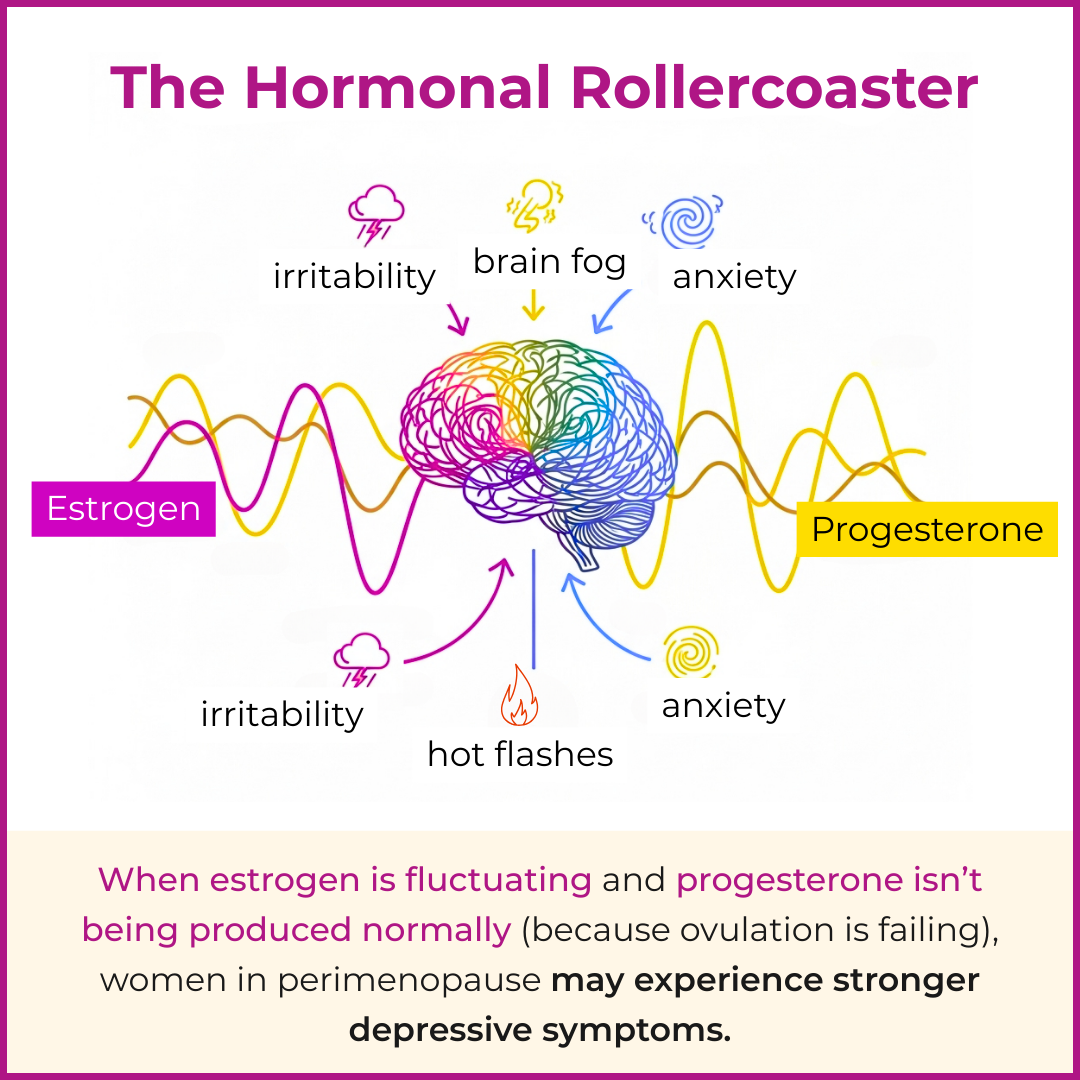
Perimenopause isn’t just about hot flashes and unpredictable cycles — it’s also a time when mood changes can hit hard. New research shows that it’s not simply low hormones causing the problem, but how wildly those hormones fluctuate. In particular, swings in estrogen and a lack of progesterone from missed ovulation may be key drivers behind the irritability, sadness, and brain fog so many women experience.
This article is for educational and general wellness purposes only. It is not medical advice and is not intended to diagnose, treat, cure, or prevent any disease. If you are noticing changes in your body or have questions about your health, please consult a knowledgeable healthcare provider.
What they studied
Researchers followed 50 perimenopausal women (average age ~48) who were experiencing mood changes for eight weeks. Each week, they measured:
What they found
Why it matters
This research suggests that hormonal variability during perimenopause — specifically, unstable estrogen levels and cycles where progesterone doesn't follow the typical ovulatory pattern — is closely associated with how women feel emotionally during this transition. Visible experiences like hot flashes may not tell the whole story.
In plain terms
When estrogen is fluctuating and progesterone isn't following the typical ovulatory pattern, women in perimenopause may notice stronger shifts in how they feel emotionally. These changes appear to be driven more by the underlying hormonal variability than by hot flashes or night sweats alone.
View the study here: https://academic.oup.com/jcem/article/105/3/e642/5...
Parlor Games products are not intended to treat, cure, prevent, or mitigate disease or other medical conditions. Our products are not the subject of the studies discussed herein, and we do not claim that our products will have the same effects as those discussed in these articles. This information is being provided for educational purposes only, and is not intended to replace the advice of a medical professional.

Lorem ipsum dolor sit amet, consectetur adipiscing elit.
Lorem ipsum dolor sit amet, consectetur adipiscing elit.
Lorem ipsum dolor sit amet, consectetur adipiscing elit.
Lorem ipsum dolor sit amet, consectetur adipiscing elit.
Disclaimer: The information provided above is intended for educational and informational purposes only. Statements made have not been evaluated by the FDA nor are they intended to treat or diagnose. Any health concerns should be discussed and evaluated by your primary health care provider.
Parlor Games, LLC ● kate@parlor-games.com ● 5304 River Rd N Ste B ● Keizer OR 97303
Disclaimer: The information provided above is intended for educational and informational purposes only. Statements made have not been evaluated by the FDA nor are they intended to treat or diagnose. Any health concerns should be discussed and evaluated by your primary health care provider.
OUR HAPPINESS GUARANTEE
We want you to feel safe and confident trying any of our products. That's why we promise a 100% money-back guarantee on the purchase price of the first bottle of any of our products. Finding your balance takes time — so please give it a full 28 days. If after 28 days you're unhappy, or it just wasn't the right fit, simply contact us and we'll process a full refund of your purchase price upon receipt. Shipping fees are not refundable.
