
CLICK TO SHOP OUR BLACK FRIDAY SALE!
*Excludes BioNude and subscriptions
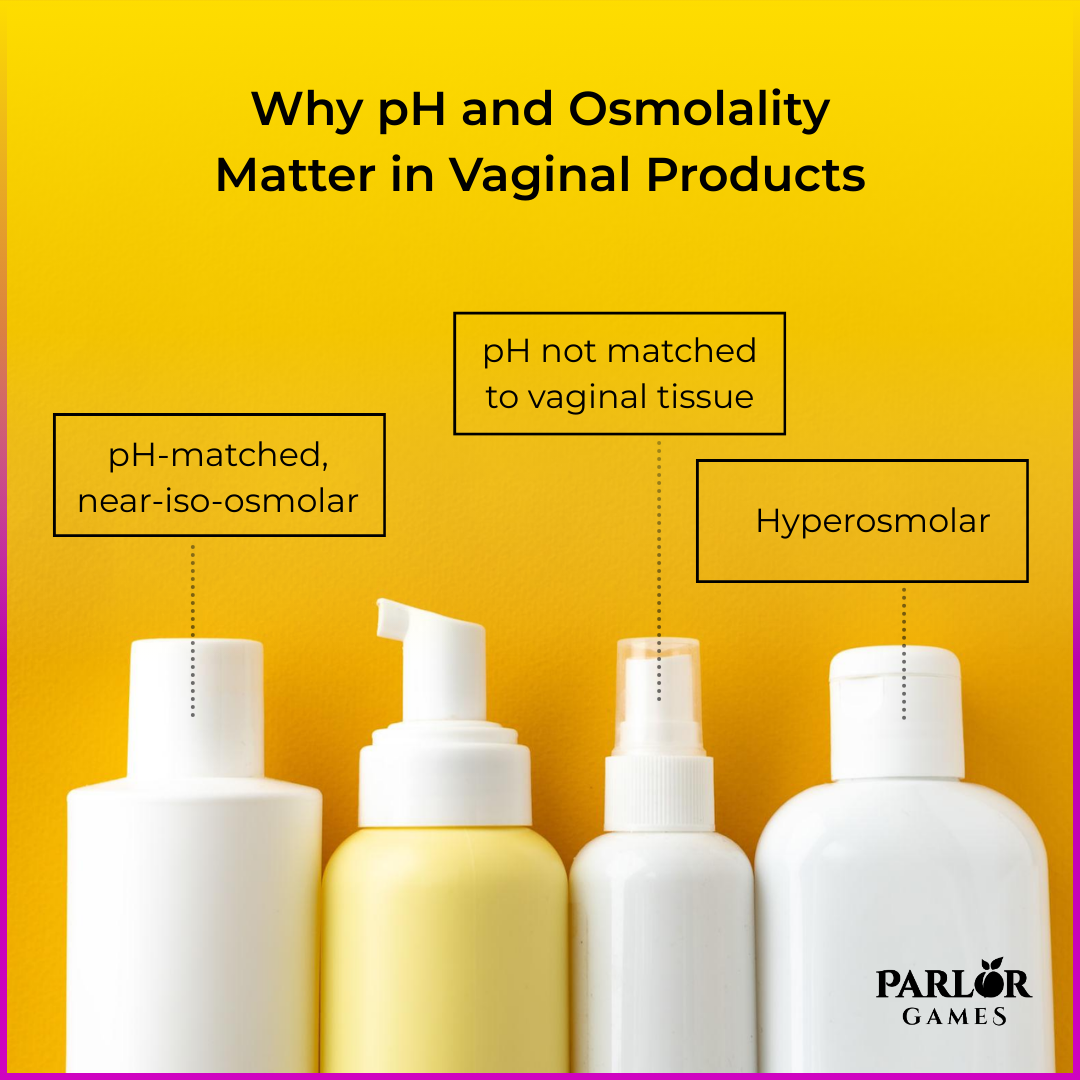
The major theme of this review is that vaginal lubricants and moisturizers are not all biologically equivalent. Two properties in particular, pH and osmolality, determine whether a product supports vaginal health or quietly undermines it. The review does not claim that all lubricants or moisturizers are unsafe. Rather, it emphasizes that biocompatibility matters.
Products that are closer to the vagina's natural pH and fluid balance are more likely to ease discomfort without increasing irritation or tissue sensitivity. In menopausal women, whose vaginal tissue is already affected by estrogen decline, this consideration becomes even more important.
In healthy, estrogen-supported vaginal tissue, pH is naturally acidic, typically around 3.5 to 4.5. This acidity is not accidental. It is maintained largely by lactobacilli, beneficial bacteria that convert glycogen in the vaginal lining into lactic acid.
This acidic environment serves several important functions:
• It is associated with a vaginal environment that tends to be less hospitable to certain bacteria and yeast
• It supports the vaginal microbiome
• It is associated with greater natural tissue comfort and mucosal wellness
As estrogen declines during menopause, the vaginal epithelium thins and glycogen levels drop. This leads to fewer lactobacilli and a rise in vaginal pH, often above 5. The result is increased susceptibility to discomfort, irritation, and sensitivity.
Potter & Panay emphasize that vaginal products should ideally be pH-matched to the vagina, particularly in postmenopausal women. Products with a pH that is too alkaline can further disrupt an already vulnerable environment, worsening discomfort rather than relieving it. In simple terms, a product with the wrong pH can undo what little natural protection the vagina still has.
Osmolality refers to the concentration of dissolved particles in a substance relative to water. In the vagina, osmolality determines whether a product draws moisture toward vaginal tissue or pulls it away.
This distinction matters more than most women or clinicians realize.
• Iso-osmolar or near-iso-osmolar products closely match the body's natural fluid balance and are generally better tolerated
• Hyperosmolar products contain a high concentration of solutes and can draw moisture away from vaginal tissue
Potter & Panay highlight that many commercial lubricants are hyperosmolar, often due to ingredients like glycerin or propylene glycol. When applied vaginally, these products may feel slippery initially but could contribute to a sensation of dryness over time.
Repeated exposure to hyperosmolar products may contribute to:
• Increased dryness and sensitivity
• General tissue discomfort
• A heightened sense of irritation over time
This is particularly relevant for menopausal tissue, which is already thinner, drier, and slower to recover. What feels soothing in the moment can, over time, worsen dryness and fragility.
Potter & Panay distinguish between lubricants and moisturizers not only by how they are used, but by how they interact with vaginal tissue.
Lubricants
• Intended for short-term use, primarily during sexual activity
• Provide immediate reduction in friction
• Do not address underlying tissue changes
• Can be problematic if hyperosmolar or improperly pH-balanced
Moisturizers
• Used regularly, independent of sexual activity
• Designed to bind water and support hydration over time
• Intended to more closely mimic natural vaginal secretions
• When well formulated, are more likely to respect vaginal pH and osmolality
The authors note that while both product types can ease discomfort, formulation quality matters more than product category. A poorly formulated moisturizer can be as disruptive as a poorly formulated lubricant. One of the key conclusions of the review is that vaginal discomfort in menopause is often addressed superficially, without adequate attention to vaginal physiology. Women are told to "use a lubricant" without guidance on whether that product supports or is at odds with vaginal tissue health.
Parlor Games products are not intended to treat, cure, prevent, or mitigate disease or other medical conditions. Our products are not the subject of the studies discussed herein, and we do not claim that our products will have the same effects as those discussed in these articles. This information is being provided for educational purposes only, and is not intended to replace the advice of a medical professional.

Lorem ipsum dolor sit amet, consectetur adipiscing elit.
Lorem ipsum dolor sit amet, consectetur adipiscing elit.
Lorem ipsum dolor sit amet, consectetur adipiscing elit.
Lorem ipsum dolor sit amet, consectetur adipiscing elit.
Disclaimer: The information provided above is intended for educational and informational purposes only. Statements made have not been evaluated by the FDA nor are they intended to treat or diagnose. Any health concerns should be discussed and evaluated by your primary health care provider.
Parlor Games, LLC ● kate@parlor-games.com ● 5304 River Rd N Ste B ● Keizer OR 97303
Disclaimer: The information provided above is intended for educational and informational purposes only. Statements made have not been evaluated by the FDA nor are they intended to treat or diagnose. Any health concerns should be discussed and evaluated by your primary health care provider.
OUR HAPPINESS GUARANTEE
We want you to feel safe and confident trying any of our products. That's why we promise a 100% money-back guarantee on the purchase price of the first bottle of any of our products. Finding your balance takes time — so please give it a full 28 days. If after 28 days you're unhappy, or it just wasn't the right fit, simply contact us and we'll process a full refund of your purchase price upon receipt. Shipping fees are not refundable.
