
CLICK TO SHOP OUR BLACK FRIDAY SALE!
*Excludes BioNude and subscriptions
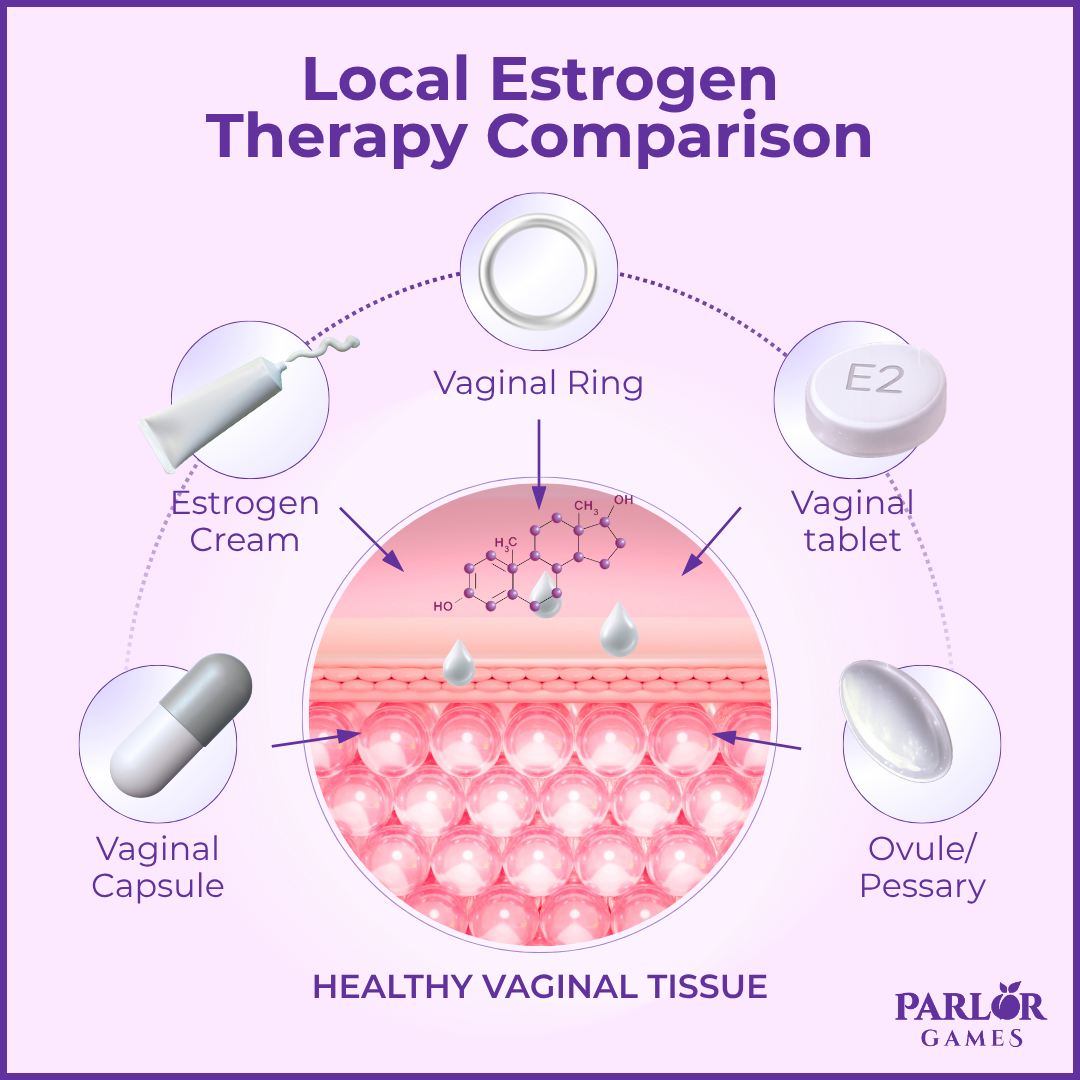
Nappi et al. conducted a narrative review examining the available local estrogen therapies used in the treatment of genitourinary syndrome of menopause (GSM). Rather than generating new clinical data, the authors evaluated and synthesized findings from previously published studies to compare the efficacy, safety, absorption, tolerability, and patient acceptability of various vaginal estrogen formulations.
The review assessed a range of local estrogen delivery systems, including creams, tablets, capsules, pessaries, rings, gels, and ovules, as well as different estrogen compounds such as estradiol, estriol, promestriene, conjugated equine estrogens, and estrone. Nappi et al. compared the available evidence to determine how these therapies perform in clinical practice and whether specific formulations offer advantages for particular patient populations.
Based on the studies reviewed, Nappi et al. concluded that local estrogen therapy remains the gold standard treatment for moderate to severe GSM symptoms, including vaginal dryness, dyspareunia, and other vulvovaginal and urinary complaints. The authors found that most local estrogen products produce similar improvements in symptoms and vaginal health, with no single formulation consistently demonstrating superior efficacy.
A key finding highlighted is that low-dose and ultra-low-dose local estrogen therapies provide meaningful symptom relief while maintaining minimal systemic absorption. The authors note that circulating estrogen levels generally remain within the postmenopausal range, supporting the favorable safety profile of these treatments for most women.
Nappi et al. ultimately emphasize that treatment selection should be individualized. Because the available products demonstrate broadly comparable efficacy, factors such as symptom presentation, anatomical involvement, ease of administration, patient preference, adherence, and overall treatment goals should guide therapeutic decisions. The authors advocate for a tailored approach to GSM management, recognizing that different formulations may better meet the needs of different patients despite achieving similar clinical outcomes.
You can view the full study, here: https://www.tandfonline.com/doi/abs/10.1080/136971...
Parlor Games products are not intended to treat, cure, prevent, or mitigate disease or other medical conditions. Our products are not the subject of the studies discussed herein, and we do not claim that our products will have the same effects as those discussed in these articles. This information is being provided for educational purposes only, and is not intended to replace the advice of a medical professional.

Lorem ipsum dolor sit amet, consectetur adipiscing elit.
Lorem ipsum dolor sit amet, consectetur adipiscing elit.
Lorem ipsum dolor sit amet, consectetur adipiscing elit.
Lorem ipsum dolor sit amet, consectetur adipiscing elit.
Disclaimer: The information provided above is intended for educational and informational purposes only. Statements made have not been evaluated by the FDA nor are they intended to treat or diagnose. Any health concerns should be discussed and evaluated by your primary health care provider.
Parlor Games, LLC ● kate@parlor-games.com ● 5304 River Rd N Ste B ● Keizer OR 97303
Disclaimer: The information provided above is intended for educational and informational purposes only. Statements made have not been evaluated by the FDA nor are they intended to treat or diagnose. Any health concerns should be discussed and evaluated by your primary health care provider.
OUR HAPPINESS GUARANTEE
We want you to feel safe and confident trying any of our products. That's why we promise a 100% money-back guarantee on the purchase price of the first bottle of any of our products. Finding your balance takes time — so please give it a full 28 days. If after 28 days you're unhappy, or it just wasn't the right fit, simply contact us and we'll process a full refund of your purchase price upon receipt. Shipping fees are not refundable.
