
CLICK TO SHOP OUR BLACK FRIDAY SALE!
*Excludes BioNude and subscriptions
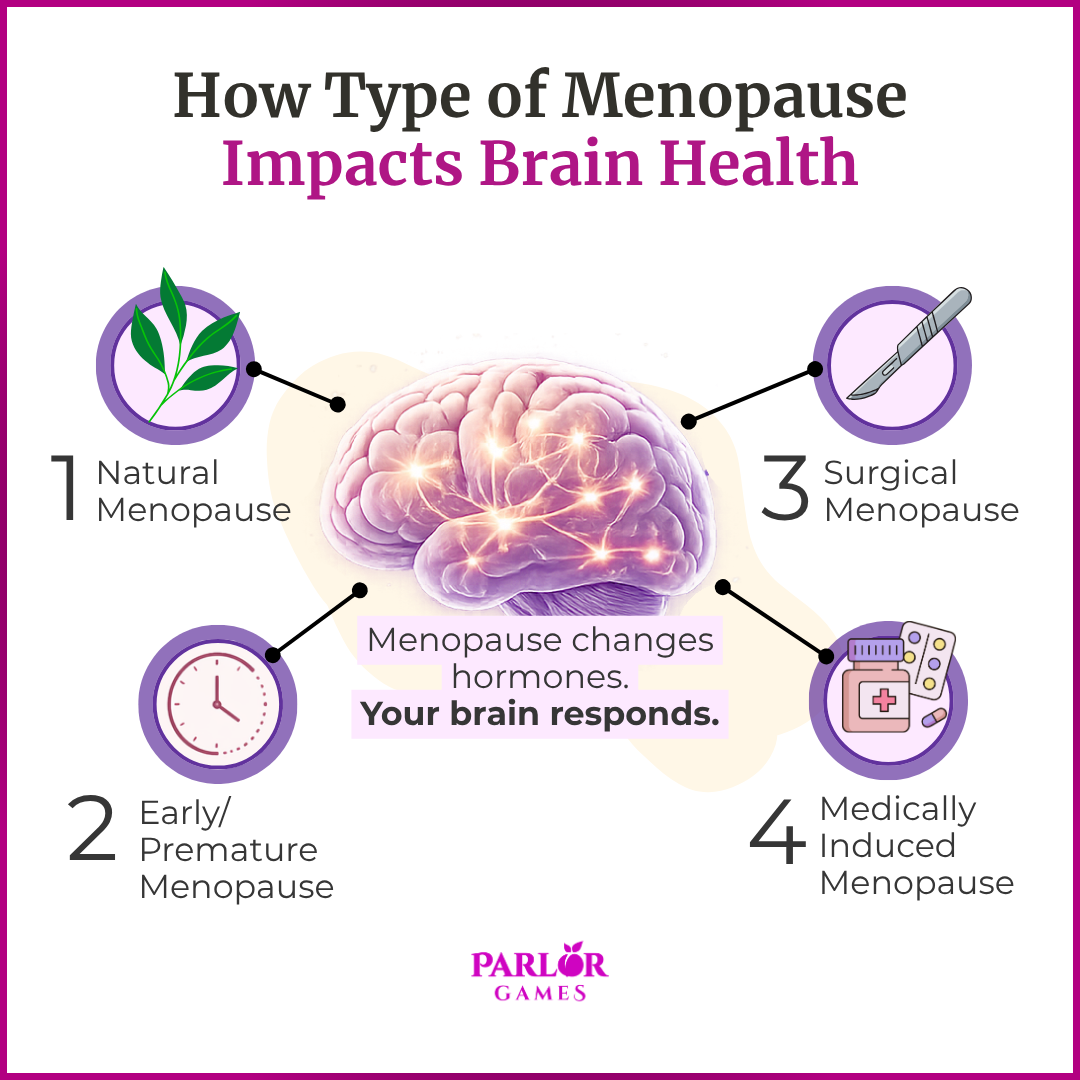
Menopause isn’t just hot flashes and mood swings, it’s a full-scale neurological shift happening in real time. And according to this study, we’ve been asking the wrong question all along. It’s not “Does hormone therapy help the brain?” It’s which woman, which menopause, which hormones, and when. Because when it comes to brain health, one size doesn’t just fit poorly, it actively obscures what’s really going on...
This article by Cambridge Press (2025) is a narrative review, meaning it reviews and analyzes other papers already published; it argues that inconsistent findings in the menopause–brain health literature stem from oversimplification. Both menopause and menopause hormone therapy (MHT) are often treated as uniform, when in reality they are biologically diverse. The authors conducted a narrative review of human and preclinical studies to evaluate how differences in menopause type and hormone therapy influence cognitive aging and neurodegenerative risk.
The review positions menopause as a significant neurobiological event rather than purely a reproductive milestone. Declining ovarian hormones, particularly estradiol, are associated with changes in synaptic plasticity, brain metabolism, and neurogenesis. These shifts help explain observed changes in cognition and the increased risk of neurodegenerative diseases such as Alzheimer's disease in postmenopausal women. Importantly, these effects are not uniform and depend on how menopause occurs.
A key contribution of the article is its emphasis on menopause heterogeneity. Natural menopause, early or premature menopause, surgical menopause, and medically induced menopause differ in both timing and the rate of hormonal decline. Earlier onset and more abrupt hormone loss, particularly in surgical or induced menopause, are associated with poorer cognitive outcomes and increased neurological risk. The authors suggest that both the timing and speed of estrogen withdrawal are critical determinants of brain response.
The review highlights that vasomotor symptoms, including hot flashes and night sweats, are not simply quality-of-life issues but are linked to underlying brain changes. These experiences are associated with altered brain connectivity, sleep disruption, and measurable differences in cognitive performance, suggesting they may act as markers of neurological vulnerability during the menopausal transition.
A central argument of the paper is that MHT should not be treated as a single, uniform treatment. Differences in formulation, route of administration, dose, and timing all influence outcomes. Estradiol and estrone have distinct effects at the receptor level, while transdermal delivery may provide more stable and physiologically relevant hormone exposure compared to oral administration. These differences help explain why studies report conflicting effects of MHT on cognition and dementia risk.
The authors discuss the critical window hypothesis, which proposes that initiating MHT closer to the onset of menopause may provide neuroprotective benefits, whereas later initiation may be less effective or potentially less favorable. This is thought to reflect changes in the brain's responsiveness to estrogen over time, adding another layer of complexity to clinical decision-making.
The review emphasizes that individual factors significantly modify outcomes. Genetic variation, particularly the presence of the apolipoprotein E epsilon 4 allele, influences Alzheimer's disease risk and may alter response to hormone therapy. Reproductive history, health status, and lifestyle factors also contribute, supporting a move toward more personalized, precision-based approaches to menopause care.
Cognitive changes associated with menopause and MHT are not global. Different domains, such as episodic memory, executive function, and attention, may be affected in distinct ways depending on menopause type and therapy characteristics. This domain specificity further contributes to variability across studies.
The review concludes that menopause and its treatment must be understood within a stratified framework that accounts for menopause type, symptom profile, hormone therapy formulation and delivery, timing, and individual biology. The authors argue that moving toward personalized approaches is essential to accurately understand and optimize brain health outcomes in women.
You can view the full study here: https://www.cambridge.org/core/journals/the-british-journal-of-psychiatry/article/one-size-does-not-fit-all-how-type-of-menopause-and-hormone-therapy-matters-for-brain-health/4B603143A42A6A3A061EFD5D4BDCF42C
This article is for educational and general wellness purposes only. It is not medical advice and is not intended to diagnose, treat, cure, or prevent any disease. If you are noticing changes in your body or have questions about your health, please consult a knowledgeable healthcare provider.
Parlor Games products are not intended to treat, cure, prevent, or mitigate disease or other medical conditions. Our products are not the subject of the studies discussed herein, and we do not claim that our products will have the same effects as those discussed in these articles. This information is being provided for educational purposes only, and is not intended to replace the advice of a medical professional.

Lorem ipsum dolor sit amet, consectetur adipiscing elit.
Lorem ipsum dolor sit amet, consectetur adipiscing elit.
Lorem ipsum dolor sit amet, consectetur adipiscing elit.
Lorem ipsum dolor sit amet, consectetur adipiscing elit.
Disclaimer: The information provided above is intended for educational and informational purposes only. Statements made have not been evaluated by the FDA nor are they intended to treat or diagnose. Any health concerns should be discussed and evaluated by your primary health care provider.
Parlor Games, LLC ● kate@parlor-games.com ● 5304 River Rd N Ste B ● Keizer OR 97303
Disclaimer: The information provided above is intended for educational and informational purposes only. Statements made have not been evaluated by the FDA nor are they intended to treat or diagnose. Any health concerns should be discussed and evaluated by your primary health care provider.
OUR HAPPINESS GUARANTEE
We want you to feel safe and confident trying any of our products. That's why we promise a 100% money-back guarantee on the purchase price of the first bottle of any of our products. Finding your balance takes time — so please give it a full 28 days. If after 28 days you're unhappy, or it just wasn't the right fit, simply contact us and we'll process a full refund of your purchase price upon receipt. Shipping fees are not refundable.
