
CLICK TO SHOP OUR BLACK FRIDAY SALE!
*Excludes BioNude and subscriptions
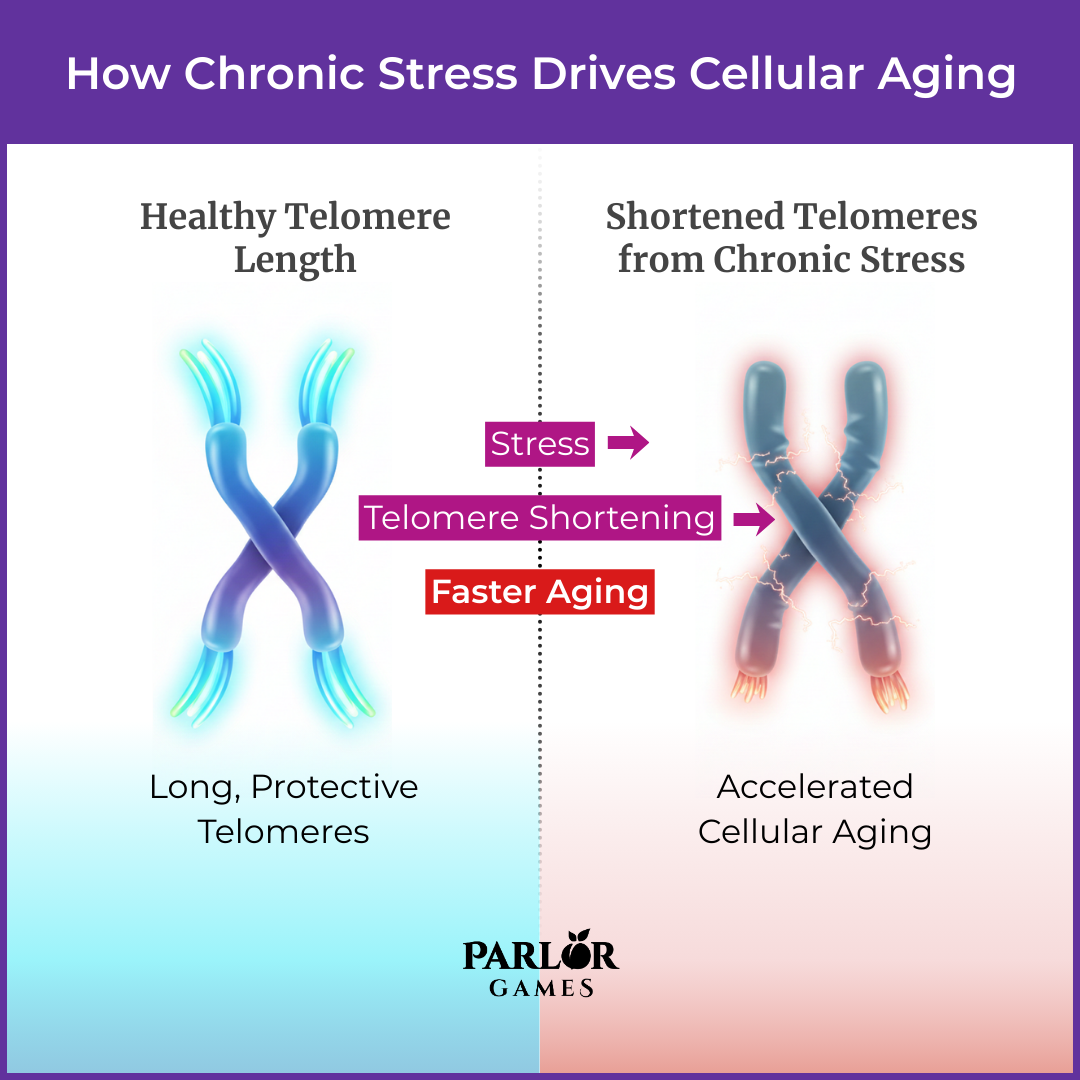
What if the thing making you feel older isn’t your age at all... but your stress levels? Emerging research shows that chronic stress doesn’t just drain your mood; it can actually speed up the biological aging process inside your cells. Before you panic, the science behind this is surprisingly empowering, and understanding it might just help you slow the whole thing down.
The researchers examined the link between chronic stress and accelerated aging by reviewing evidence from multiple fields, including human population studies, animal research, and cellular experiments. They looked at studies measuring stress levels and biological aging markers (such as telomere length, inflammation, mitochondrial function, and DNA damage), analyzed laboratory work where cells were exposed to stress hormones, and evaluated animal models subjected to long-term stress. By integrating findings from genetics, epigenetics, immunology, mitochondrial biology, and neuroendocrinology, they built a unified picture of how chronic stress affects the body's major aging pathways.
Across many human studies, people experiencing long-term stress show significantly shorter telomeres, meaning their cells reach "old age" sooner. Telomere shortening was observed in immune cells, cardiovascular tissues, and brain-related cells.
The review found that chronic exposure to stress hormones pushes the immune system into a constant, low-grade inflammatory state. Over time, this inflammation contributes to tissue damage, reduced repair, and faster biological aging.
Long-term stress increases the production of reactive oxygen species (ROS). These molecules damage DNA, proteins, lipids, and especially mitochondria. Damaged mitochondria produce even more ROS, creating a vicious cycle that speeds aging.
Mitochondria become less efficient at producing energy (ATP) when exposed to chronic stress signals. Damaged mitochondria accumulate because the normal cleanup process (mitophagy) becomes impaired. Low cellular energy means slower repair and regeneration.
Stressed cells are more likely to enter a "senescent" state — they stop dividing, secrete inflammatory chemicals, and interfere with normal tissue renewal. Accumulation of these senescent cells is a major driver of visible and internal aging.
The review included studies showing stress-related changes in DNA methylation patterns, which are the markers used to calculate "epigenetic clocks." High chronic stress consistently correlated with older biological age compared to chronological age.
The biological changes above are associated with elevated risk for:
Chronic stress does not just influence mood or daily functioning — it pushes multiple aging pathways at once. It accelerates aging at the genetic, mitochondrial, inflammatory, and epigenetic levels, making stressed individuals biologically older than their non-stressed peers.
The study emphasizes that managing chronic stress is not simply about mental health but is directly tied to slowing biological aging, protecting cellular function, and long-term cellular health.
View the study here: https://www.mdpi.com/2227-9059/8/7/198
You can also watch Dr. Robyn discuss this on 'Ask Dr. Robyn' — Wednesdays at 4pm PST inside the Sexy Sassy Sisterhood!
This article is for educational and general wellness purposes only. It is not medical advice and is not intended to diagnose, treat, cure, or prevent any disease. If you are noticing changes in your body or have questions about your health, please consult a knowledgeable healthcare provider.
Parlor Games products are not intended to treat, cure, prevent, or mitigate disease or other medical conditions. Our products are not the subject of the studies discussed herein, and we do not claim that our products will have the same effects as those discussed in these articles. This information is being provided for educational purposes only, and is not intended to replace the advice of a medical professional.

Lorem ipsum dolor sit amet, consectetur adipiscing elit.
Lorem ipsum dolor sit amet, consectetur adipiscing elit.
Lorem ipsum dolor sit amet, consectetur adipiscing elit.
Lorem ipsum dolor sit amet, consectetur adipiscing elit.
Disclaimer: The information provided above is intended for educational and informational purposes only. Statements made have not been evaluated by the FDA nor are they intended to treat or diagnose. Any health concerns should be discussed and evaluated by your primary health care provider.
Parlor Games, LLC ● kate@parlor-games.com ● 5304 River Rd N Ste B ● Keizer OR 97303
Disclaimer: The information provided above is intended for educational and informational purposes only. Statements made have not been evaluated by the FDA nor are they intended to treat or diagnose. Any health concerns should be discussed and evaluated by your primary health care provider.
OUR HAPPINESS GUARANTEE
We want you to feel safe and confident trying any of our products. That's why we promise a 100% money-back guarantee on the purchase price of the first bottle of any of our products. Finding your balance takes time — so please give it a full 28 days. If after 28 days you're unhappy, or it just wasn't the right fit, simply contact us and we'll process a full refund of your purchase price upon receipt. Shipping fees are not refundable.
