
CLICK TO SHOP OUR BLACK FRIDAY SALE!
*Excludes BioNude and subscriptions
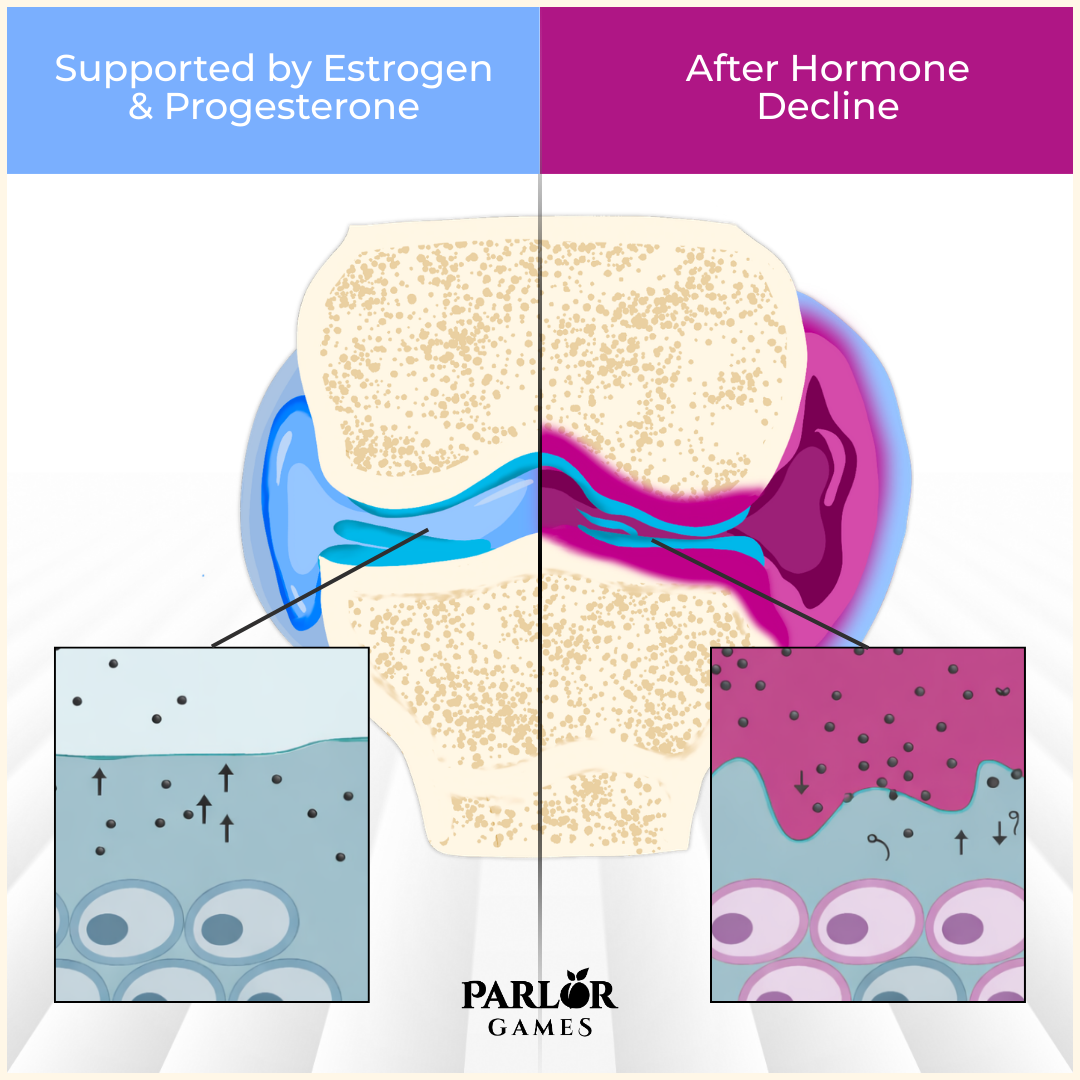
Full disclosure — to investigate this, researchers used a well-established mouse model (so we always have to take that with a grain of salt). However, this model does mimic menopause by removing ovarian hormone production, creating a controlled environment where the effects of hormone loss could be isolated and measured. They then closely examined the health of cartilage, the smooth, resilient tissue that cushions joints and allows bones to glide against one another without friction. What they found was not subtle. In the absence of estrogen and progesterone, cartilage cells showed signs of accelerated aging, increased inflammation, and breakdown of the structural framework that keeps joints strong and shock absorbent. In other words, hormone loss did not just change how the animals felt. It changed how their joint tissue functioned and aged at a cellular and structural level. This provides a biological explanation for why so many women notice new joint stiffness, discomfort, and slower recovery around the menopausal transition.
You can see the full study here: https://www.nature.com/articles/s43587-024-00773-2
Estradiol
This is the main form of estrogen in premenopausal women. It plays roles in:
Progesterone
Often overshadowed by estrogen, progesterone is also involved in:
When both decline during perimenopause and menopause, tissues throughout the body change — including joints.
Senescent cells are cells that:
The study found more senescence markers in cartilage after hormone loss, meaning cartilage cells aged faster and behaved more like damaged, inflammatory cells.
Why this matters:
This helps explain why joint stiffness, discomfort, and changes in recovery often appear or become more noticeable around the menopausal transition.
Cartilage is held together by a structural framework called the extracellular matrix. This includes collagen and proteoglycans that give cartilage its:
The study showed increased matrix disassembly, meaning the cartilage scaffold literally began to fall apart when estrogen and progesterone were removed.
Why this matters:
In short, hormone loss makes joints mechanically more fragile.
Beyond molecular changes, the researchers saw visible degeneration of cartilage tissue. This means:
This provides a biological explanation for why many women report:
Menopause is not just a reproductive transition. It is a musculoskeletal aging accelerator.
Estrogen and progesterone act as:
When these hormones fall:
This helps explain why joint changes become more common among women in the years after menopause, and why joint discomfort often shows up alongside other perimenopausal experiences like sleep disruption, fatigue, and body composition changes.
This article is for educational and general wellness purposes only. It is not medical advice and is not intended to diagnose, treat, cure, or prevent any disease. If you are noticing changes in your body or have questions about your health, please consult a knowledgeable healthcare provider.
Parlor Games products are not intended to treat, cure, prevent, or mitigate disease or other medical conditions. Our products are not the subject of the studies discussed herein, and we do not claim that our products will have the same effects as those discussed in these articles. This information is being provided for educational purposes only, and is not intended to replace the advice of a medical professional.

Lorem ipsum dolor sit amet, consectetur adipiscing elit.
Lorem ipsum dolor sit amet, consectetur adipiscing elit.
Lorem ipsum dolor sit amet, consectetur adipiscing elit.
Lorem ipsum dolor sit amet, consectetur adipiscing elit.
Disclaimer: The information provided above is intended for educational and informational purposes only. Statements made have not been evaluated by the FDA nor are they intended to treat or diagnose. Any health concerns should be discussed and evaluated by your primary health care provider.
Parlor Games, LLC ● kate@parlor-games.com ● 5304 River Rd N Ste B ● Keizer OR 97303
Disclaimer: The information provided above is intended for educational and informational purposes only. Statements made have not been evaluated by the FDA nor are they intended to treat or diagnose. Any health concerns should be discussed and evaluated by your primary health care provider.
OUR HAPPINESS GUARANTEE
We want you to feel safe and confident trying any of our products. That's why we promise a 100% money-back guarantee on the purchase price of the first bottle of any of our products. Finding your balance takes time — so please give it a full 28 days. If after 28 days you're unhappy, or it just wasn't the right fit, simply contact us and we'll process a full refund of your purchase price upon receipt. Shipping fees are not refundable.
