
CLICK TO SHOP OUR BLACK FRIDAY SALE!
*Excludes BioNude and subscriptions
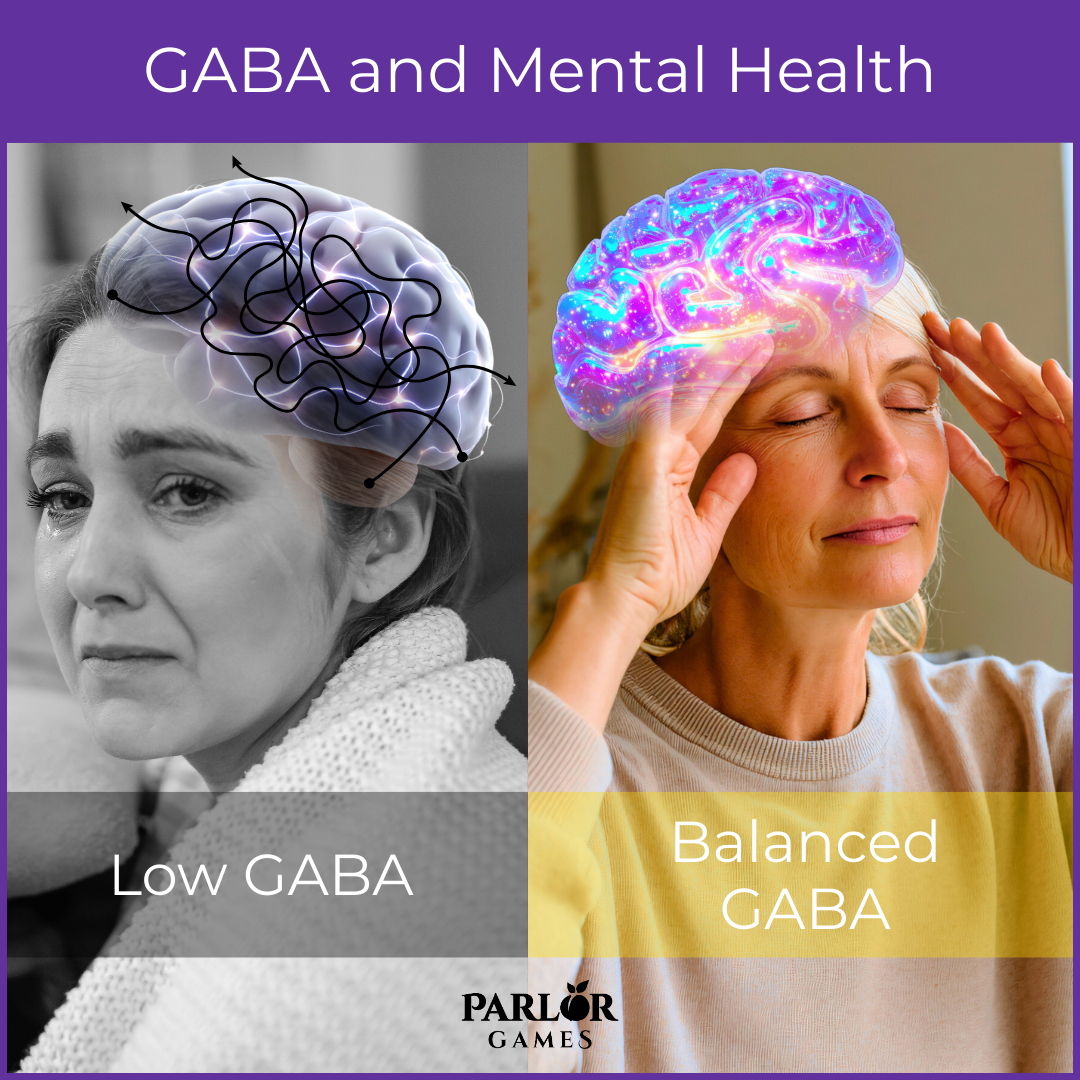
Researchers have explored how the GABA system — the brain's primary inhibitory neurotransmitter system — is involved in mood and nervous-system regulation. This article looks at what that research has found, how GABA interacts with other biological pathways, and what scientists are learning about the role GABA plays in general brain chemistry and calm.
This article is for educational and general wellness purposes only. It is not medical advice and is not intended to diagnose, treat, cure, or prevent any disease. If you are noticing changes in your body or have questions about your health, please consult a knowledgeable healthcare provider.
Across many types of studies — brain imaging, spinal fluid measurements, and post-mortem analysis — researchers have observed that some people experiencing significant mood changes show:
This suggests the brain may lose some of its natural inhibitory "calming" ability during certain mood states — an area researchers continue to study.
GABA doesn't work in isolation. Research shows that GABA activity affects, and is affected by:
This reinforces the picture of mood as a multi-system process, not just one chemical in isolation. Research continues to explore how GABA interacts with other neurotransmitter systems, including those involved in mood.
There is evidence that certain prescription medications can influence GABA levels or GABA receptor function over time — suggesting that the GABA system may play a role in how the brain's inhibitory balance is maintained. This remains an active area of neuroscience research, and scientists are still working to understand the full picture of how these interactions unfold across different individuals.
One area of growing interest in neuroscience is neuroactive steroids that interact with GABA-A receptors. Early studies on some of these compounds have shown researchers observing changes in mood and sleep in early study contexts — lending further support to the hypothesis that the GABA system plays a meaningful role in how the brain regulates calm and emotional tone.
These findings are still emerging, and scientists view them as an important signal for future research into how the inhibitory nervous system shapes mood and wellbeing.
One question that comes up is whether GABA applied to the skin can reach the brain. The research here is genuinely mixed — some studies suggest a possible indirect or limited central effect, while others find no clear penetration at all.
What is better supported is that GABA can act locally — on GABA receptors in the skin, muscles, and peripheral nerves. Some studies have explored whether topical GABA may have local effects on tension and comfort, though findings in humans remain limited.
The peripheral nervous system has GABA receptors, and researchers are exploring whether topical application may contribute to a sense of comfort and calm. It's an area worth watching as the science develops.
Parlor Games products are not intended to treat, cure, prevent, or mitigate disease or other medical conditions. Our products are not the subject of the studies discussed herein, and we do not claim that our products will have the same effects as those discussed in these articles. This information is being provided for educational purposes only, and is not intended to replace the advice of a medical professional.

Lorem ipsum dolor sit amet, consectetur adipiscing elit.
Lorem ipsum dolor sit amet, consectetur adipiscing elit.
Lorem ipsum dolor sit amet, consectetur adipiscing elit.
Lorem ipsum dolor sit amet, consectetur adipiscing elit.
Disclaimer: The information provided above is intended for educational and informational purposes only. Statements made have not been evaluated by the FDA nor are they intended to treat or diagnose. Any health concerns should be discussed and evaluated by your primary health care provider.
Parlor Games, LLC ● kate@parlor-games.com ● 5304 River Rd N Ste B ● Keizer OR 97303
Disclaimer: The information provided above is intended for educational and informational purposes only. Statements made have not been evaluated by the FDA nor are they intended to treat or diagnose. Any health concerns should be discussed and evaluated by your primary health care provider.
OUR HAPPINESS GUARANTEE
We want you to feel safe and confident trying any of our products. That's why we promise a 100% money-back guarantee on the purchase price of the first bottle of any of our products. Finding your balance takes time — so please give it a full 28 days. If after 28 days you're unhappy, or it just wasn't the right fit, simply contact us and we'll process a full refund of your purchase price upon receipt. Shipping fees are not refundable.
