
CLICK TO SHOP OUR BLACK FRIDAY SALE!
*Excludes BioNude and subscriptions
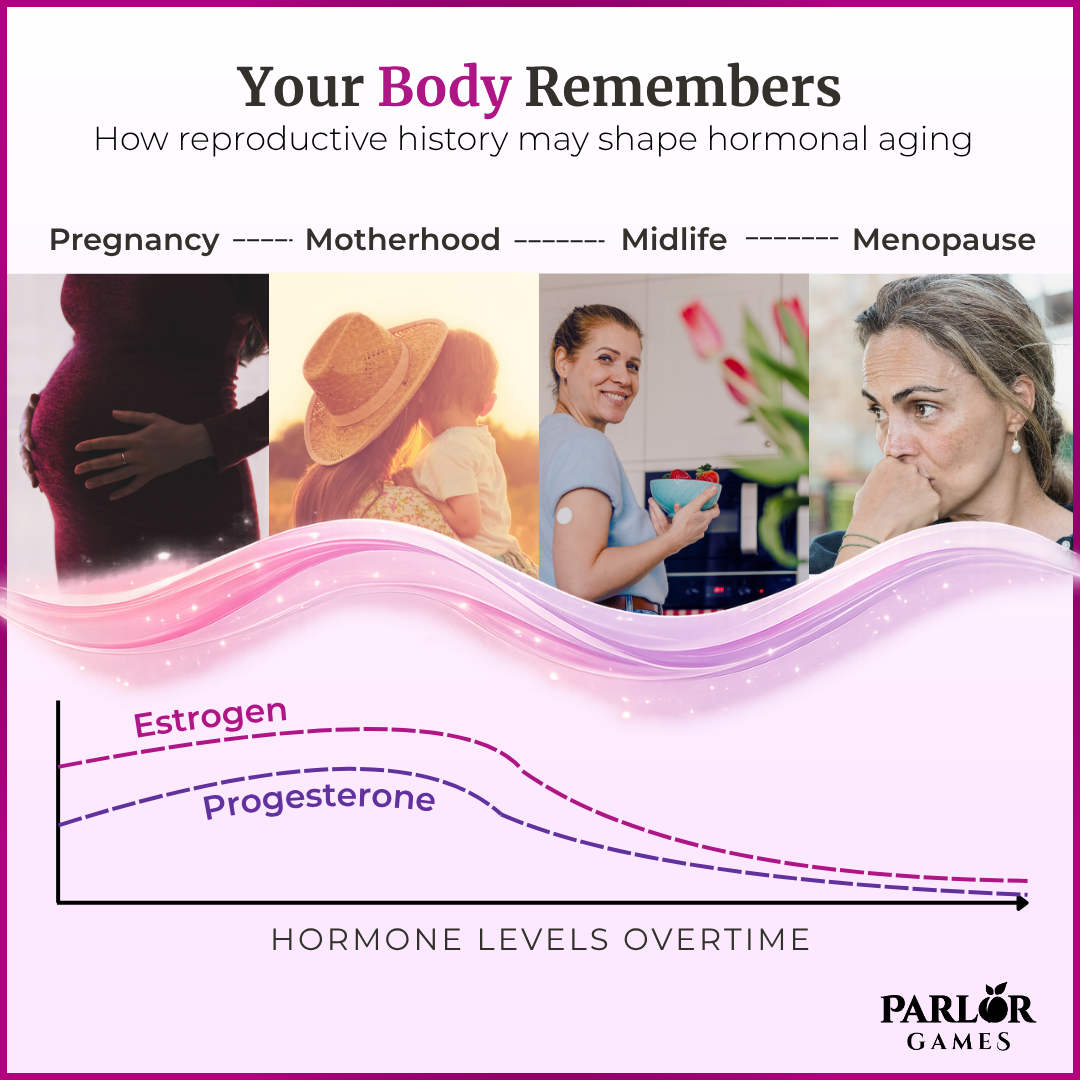
This study takes a question many women quietly wonder about and gives it a proper scientific answer. Does when and how often you have babies come back to haunt or help you decades later...?
Using data from more than 15,000 postmenopausal women in the Women’s Health Initiative, the researchers looked at parity, meaning number of births, alongside age at first and last childbirth, and mapped that against health-related quality of life (HRQoL) later in life. This is not just “do you feel fine,” but a structured measure of physical function, pain, energy, emotional well-being, and ability to live your actual life without feeling like your body is betraying you.
Women who had their first child before age 20 had lower health-related quality of life scores in their postmenopausal years compared to women who had their first child between ages 25 and 29. This showed up most clearly in physical health measures, suggesting that early reproductive timing may have long-term physiological consequences.
On the flip side, women with four or more children had slightly better quality of life scores than women with two children. And women who had their last child after age 40 also showed better outcomes later in life. Before anyone starts rewriting their life plan, this is not a prescription, it is a pattern. These associations likely reflect underlying health, resilience, and access to resources rather than childbirth itself being the magic ingredient.
One of the more interesting findings is that menopause timing plays a key role in all of this. Women who had children very young were more likely to experience earlier menopause, and earlier menopause is strongly linked to lower health-related quality of life.
This matters because earlier menopause is associated with increased risks of cardiovascular disease, reduced bone density, metabolic dysfunction, and cognitive changes. In other words, the timeline of your reproductive life appears to influence the timeline of your hormonal aging, and that ripple effect shows up years later in how your body feels and functions.
This is where things get nuanced. The study is not saying that having more children or having them later guarantees better health. Instead, reproductive patterns are acting like clues. Women who can have children later into their reproductive years may have slower biological aging, better ovarian reserve, or overall stronger baseline health. Similarly, early childbirth is often linked to socioeconomic factors, access to healthcare, and cumulative life stress, all of which can influence long-term health outcomes.
There is also a hormonal exposure angle. Pregnancy temporarily alters estrogen, progesterone, and metabolic signaling, and cumulative exposure across a lifetime may influence cardiovascular and metabolic health. Add in factors like breastfeeding, weight changes, sleep disruption, and stress load, and you start to see how reproductive history becomes a full-body, long-term health story rather than a closed chapter.
This study reinforces something that is becoming increasingly clear in women’s health. Your reproductive history is not just background information. It is part of your health blueprint.
If you had children very young, it may be worth paying closer attention to cardiovascular, bone, and metabolic health earlier in midlife. If you experienced early menopause, that is not just an inconvenience, it is a clinical signal. And if you had children later, that may reflect a different hormonal aging trajectory, but it is still not a free pass.
The bigger message is this. There is no “perfect” reproductive timeline. But there is value in understanding your own timeline and using it to guide smarter, more personalized care as you move through perimenopause and beyond.
The original Study: https://journals.sagepub.com/doi/abs/10.1177/15409...
Xing Z, Alman AC, Kirby RS. Parity, Age at Childbirth, and Later-Life Health-Related Quality of Life in Postmenopausal Women.
Women’s Health Initiative (WHI) Study data on postmenopausal health outcomes.

Lorem ipsum dolor sit amet, consectetur adipiscing elit.
Lorem ipsum dolor sit amet, consectetur adipiscing elit.
Lorem ipsum dolor sit amet, consectetur adipiscing elit.
Lorem ipsum dolor sit amet, consectetur adipiscing elit.
Disclaimer: The information provided above is intended for educational and informational purposes only. Statements made have not been evaluated by the FDA nor are they intended to treat or diagnose. Any health concerns should be discussed and evaluated by your primary health care provider.
Parlor Games, LLC ● kate@parlor-games.com ● 5304 River Rd N Ste B ● Keizer OR 97303
Disclaimer: The information provided above is intended for educational and informational purposes only. Statements made have not been evaluated by the FDA nor are they intended to treat or diagnose. Any health concerns should be discussed and evaluated by your primary health care provider.
28 Day Challenge Subscription Details

We ship you a 28 day supply of Silky Peach Cream for only $29 (more than 25% off our normal price) when you sign up for Subscribe & Save.
Follow the directions we include in the package and apply Silky Peach cream on your tender bits for 28 days.

Decision Day:
5 days before your subscription rebills, we’ll send you an email reminder with a link. If you decide Silky Peach is nice but not your thing… you can click that link and cancel your subscription without even talking to anyone. No hassle — no questions asked.
If you are like 72% of our Silky Peach customers, you’ll love it and can't imagine life without it. In that case, do nothing, and we’ll welcome you to the Parlor Games family and ship Silky Peach Cream to your door step every month for the same discounted price of $29 — locked in for as long as you remain a subscriber.

Important note about our easy-breezy subscriptions:
We know that some companies make it hard to cancel a subscription — that’s not us. Our mission is to save the world — one vagina at a time! If you decide you don’t need Estriol as an ongoing solution for dryness, incontinence, UTIs and keeping sex fun and comfortable again, we understand. Five days before we ship your next order, you'll receive an email with a link to cancel right there in the message.
No hunting, no searching, we got you. Respect is where it’s at.
FYI – Estriol is beneficial for skin integrity and mucous membranes. It’s great for vaginal atrophy and also amazing for use on the face and neck. Applying a small amount — about 1 pump — can help build the collagen and plump up the cells to reduce wrinkles. Who knew!!
OUR HAPPINESS GUARANTEE
We want you to feel safe and confident trying any of our products. That's why we promise 100% money-back guarantee on the purchase price of the first bottle of any of our products. Balancing hormones DOES take some time, so please try it for 28 days. If after 28 days you are unhappy, or the product just hasn't worked for you, simply contact us and we'll process a refund of your full purchase price upon receipt. Sorry, shipping fees are not refundable.
