
CLICK TO SHOP OUR BLACK FRIDAY SALE!
*Excludes BioNude and subscriptions
You start a new intimate skincare routine — finally doing something nice for your delicate bits — and then… surprise. Some unexpected changes show up down south: a little extra discharge, some itching, maybe a twinge that feels all too familiar.
Before you blame your new cream (or your laundry detergent, or your favorite undies), there's something worth understanding: starting a new routine can sometimes bring a pre-existing imbalance to the surface rather than cause it. Here's the science of what's really going on.
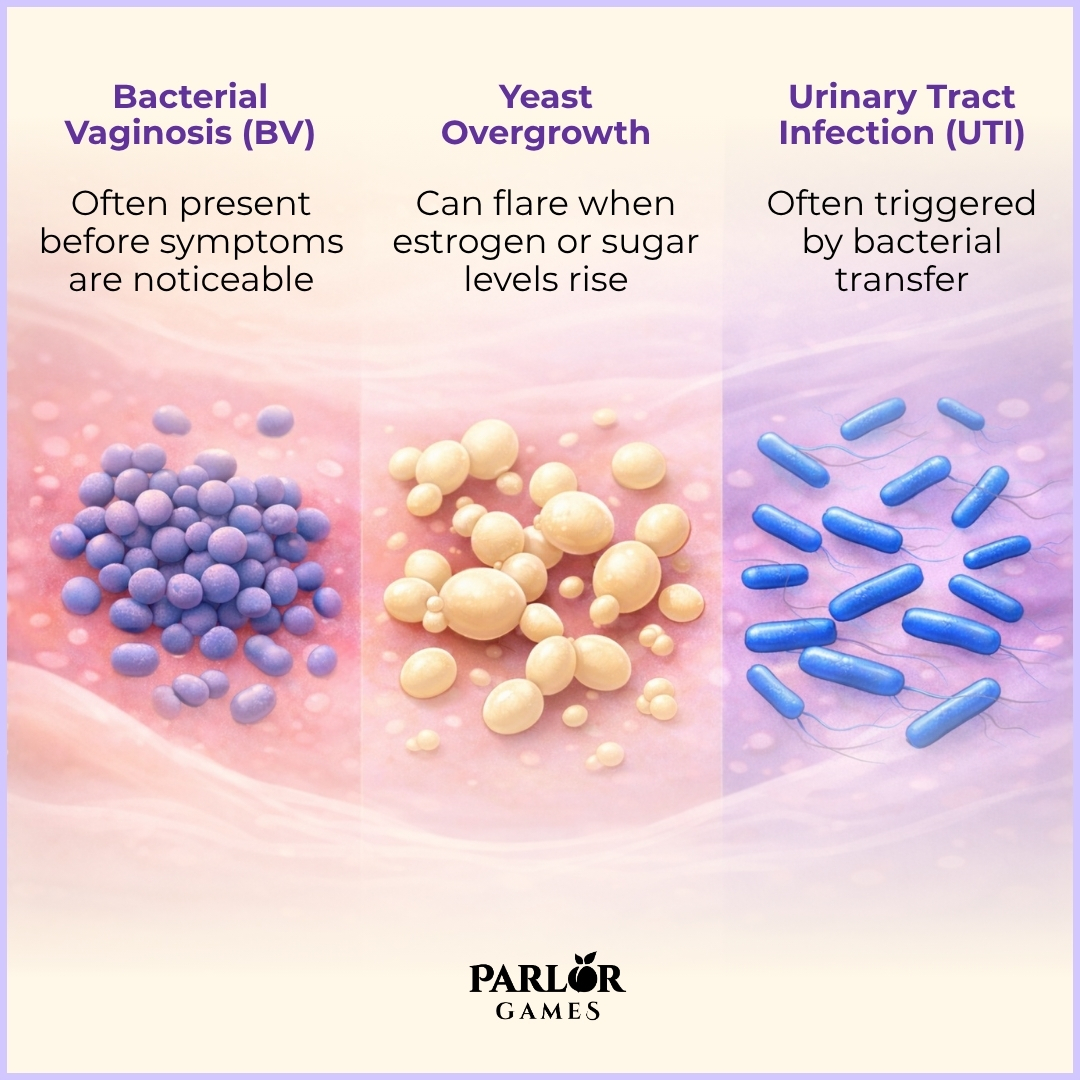
Bacterial vaginosis is an imbalance of vaginal bacteria. It happens when protective bacteria decline and potentially harmful bacteria overgrow, often causing thin gray or white discharge, odor, or irritation. Some women notice BV with very mild — or no — changes at all.
Yeast infections are an overgrowth of yeast (usually Candida) in the vagina. Common changes include thick white discharge, itching, redness, and irritation. They are often associated with shifts in hormones, antibiotics, stress, or immune function. Yeast infections are sometimes called 'thrush.'
A UTI is an infection of the urinary tract — most often the bladder — usually caused by bacteria entering the urethra and travelling upward. Common experiences include burning with urination, urgency, increased frequency, pressure, or discomfort.
As women move through perimenopause and beyond, estrogen levels commonly decline. Estrogen plays a role in several aspects of intimate tissue health, including:
Without adequate estrogen, intimate dryness becomes much more common. Estriol — sometimes called the gentlest of the estrogens — is applied topically so intimate skin can look and feel soft and supple.
Here's the science behind why some women notice changes in vaginal balance when they begin using an estriol product — or really, any new intimate routine.
With estrogen decline, the body produces less glycogen in vaginal tissue. Glycogen is the primary food source for Lactobacillus — the bacteria that keeps the vaginal environment acidic by producing hydrogen peroxide. With less glycogen available, Lactobacillus populations can dwindle and pH can rise, creating an environment where other bacteria are more likely to take hold — including those associated with bacterial vaginosis.
Many women are living with low-grade BV and are not aware of it. When estriol is introduced topically, the changing vaginal environment can make an existing imbalance more noticeable — not because the cream caused the imbalance, but because it brought what was already there to the surface. Over time, as the vaginal environment continues to adjust, some women find that their microbiome balance naturally stabilizes — though experiences vary by individual, and a healthcare provider is the best resource for anything persistent.
The relationship between estrogen and yeast levels is genuinely interesting — and not as simple as "more estrogen = better."
While low estrogen is associated with changes to vaginal tissue, high estrogen levels are not straightforwardly protective against yeast. Research published in Cell Reports found that high estrogen levels do not stop the growth or invasion of Candida albicans (a.k.a. thrush) — meaning elevated estrogen may actually increase the likelihood of yeast overgrowth in some cases. Part of the reason: estrogen influences glycogen levels in vaginal tissue, and glycogen is also a food source for yeast. More estrogen → more glycogen → more potential fuel for yeast. For women who find this is a pattern for them, the practical step is usually to pause use and let the system settle before reintroducing gradually.
A low-sugar approach to eating is also consistently associated with keeping yeast in check, since dietary sugar can contribute to yeast overgrowth.
If you notice vaginal changes — discharge, odor, itching, or urinary discomfort — talking to a healthcare provider is genuinely the most useful step. They can identify what's actually going on and guide you from there.
It is worth knowing that starting any new intimate skincare routine can highlight imbalances that were already present. Estriol cream is formulated for topical use on vulvar tissue and is not intended to address or correct bacterial or yeast infections.
For anyone navigating vaginal changes, the general wisdom is to simplify — strip away anything that could be adding to the picture. That means scented soaps, flavored lubricants, synthetic fabrics, and yes, even semen can be temporarily disruptive. (That doesn't mean avoid intimacy — just rinse off afterward.)
Many women choose to pause their estriol cream routine during an active bacterial or yeast episode and restart slowly once things settle — finding the frequency and amount that works for their individual microbiome. Every woman's vaginal environment is different, and there is genuine value in tuning in to what yours is telling you.
Parlor Games products are not intended to treat, cure, prevent, or mitigate disease or other medical conditions. Our products are not the subject of the studies discussed herein, and we do not claim that our products will have the same effects as those discussed in these articles. This information is being provided for educational purposes only, and is not intended to replace the advice of a medical professional.

Lorem ipsum dolor sit amet, consectetur adipiscing elit.
Lorem ipsum dolor sit amet, consectetur adipiscing elit.
Lorem ipsum dolor sit amet, consectetur adipiscing elit.
Lorem ipsum dolor sit amet, consectetur adipiscing elit.
Disclaimer: The information provided above is intended for educational and informational purposes only. Statements made have not been evaluated by the FDA nor are they intended to treat or diagnose. Any health concerns should be discussed and evaluated by your primary health care provider.
Parlor Games, LLC ● kate@parlor-games.com ● 5304 River Rd N Ste B ● Keizer OR 97303
Disclaimer: The information provided above is intended for educational and informational purposes only. Statements made have not been evaluated by the FDA nor are they intended to treat or diagnose. Any health concerns should be discussed and evaluated by your primary health care provider.
OUR HAPPINESS GUARANTEE
We want you to feel safe and confident trying any of our products. That's why we promise a 100% money-back guarantee on the purchase price of the first bottle of any of our products. Finding your balance takes time — so please give it a full 28 days. If after 28 days you're unhappy, or it just wasn't the right fit, simply contact us and we'll process a full refund of your purchase price upon receipt. Shipping fees are not refundable.
