
CLICK TO SHOP OUR BLACK FRIDAY SALE!
*Excludes BioNude and subscriptions
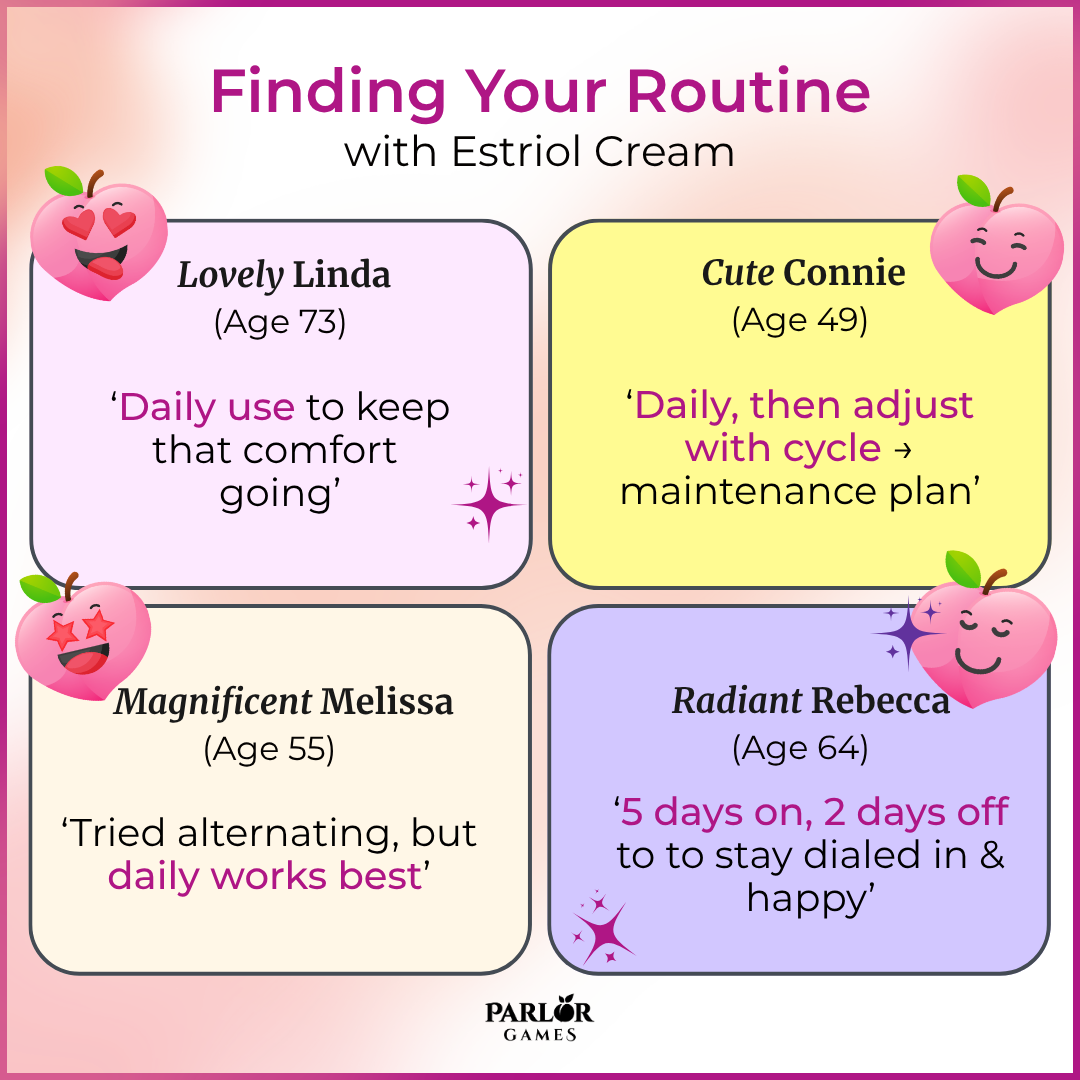
Everyone is unique. Which is great... but it's also a total pain when it comes to figuring out how often to apply estriol cream. So instead of handing you a rigid set of "best practices," we're sharing some real-life scenarios so you can get a better sense of what might work best for you.
Linda is 73 when she discovers estriol cream. She went through natural menopause at 52 and has had 20 years of declining estrogen levels. She experienced vaginal dryness, sensitivity with intimacy, and some urinary discomfort. She is not on any HRT — it was both too expensive and she didn't like the side effects. Linda's estrogen levels had dropped very low. It took nearly 3 months for the estriol levels in her tissue to rebuild to the point where she stopped feeling red-raw and could walk and move comfortably again. Because her estrogen had gotten so low, Linda may benefit from using estriol every day to help intimate tissue appear more supple and to support overall feminine comfort.
Connie is 49 when she starts using estriol cream. She is still getting her period, but it's irregular. She did have some hormone testing done and still has some estrogen driving the monthly cycle. She does have vaginal dryness though, and it hurts to have sex. She and hubby are NOT done with having sex and she wanted a solution. Connie started using the cream every day and within 2 weeks she — and hubby — noticed a significant difference, like a "WOW honey you ARE pleased to see me" kind of difference. She decided to use the cream daily for a full month and after that dropped to every day during the first half of her cycle and then just every 4 or 5 days in the second half of her cycle. She plans to switch to every other day once she is post-menopausal. For Connie, the supply of estriol to the vaginal tissue won't likely get really low, so a maintenance amount will likely be a good plan for her.
Melissa was 55 when her friend introduced her to estriol cream. She had a hysterectomy at age 48 due to a gynecological condition, and seven years later began experiencing the effects of declining estrogen. Her skin is tender and raw, and it takes several days to recover from sex with her boyfriend — it's really impacting their relationship. It took about a month to begin to feel the difference and for sex to not feel super painful. By 8 weeks she noticed a real difference in comfort and felt more naturally at ease during intimacy. They still use a lube, especially for entry, but there's a huge difference. Over time, Melissa tried switching to every other day, but found that estriol cream works best for her if she uses it every day. For Melissa, although she hadn't been in menopause for too many years before finding the cream, her estrogen levels had gotten low enough to affect vaginal tissue comfort. Using the cream daily is probably a good idea for her.
Rebecca is 64 and has experienced recurring vaginal discomfort and dryness. Rebecca started using estriol cream in the hope it would help support the vaginal tissue and the tissue in the whole pelvic area. The cream did sting to use in the inner labia, and for the first couple of months she applied it on the outside of the labia. She knew the goal was to get the estriol into the tissue, even if it took a little longer. Over time, Rebecca noticed her overall vaginal comfort and freshness improved. She found a routine that worked well for her individual needs — settling on using the cream every day for 5 days and then taking 2 days off.
Parlor Games products are not intended to treat, cure, prevent, or mitigate disease or other medical conditions. Our products are not the subject of the studies discussed herein, and we do not claim that our products will have the same effects as those discussed in these articles. This information is being provided for educational purposes only, and is not intended to replace the advice of a medical professional.

Lorem ipsum dolor sit amet, consectetur adipiscing elit.
Lorem ipsum dolor sit amet, consectetur adipiscing elit.
Lorem ipsum dolor sit amet, consectetur adipiscing elit.
Lorem ipsum dolor sit amet, consectetur adipiscing elit.
Disclaimer: The information provided above is intended for educational and informational purposes only. Statements made have not been evaluated by the FDA nor are they intended to treat or diagnose. Any health concerns should be discussed and evaluated by your primary health care provider.
Parlor Games, LLC ● kate@parlor-games.com ● 5304 River Rd N Ste B ● Keizer OR 97303
Disclaimer: The information provided above is intended for educational and informational purposes only. Statements made have not been evaluated by the FDA nor are they intended to treat or diagnose. Any health concerns should be discussed and evaluated by your primary health care provider.
OUR HAPPINESS GUARANTEE
We want you to feel safe and confident trying any of our products. That's why we promise a 100% money-back guarantee on the purchase price of the first bottle of any of our products. Finding your balance takes time — so please give it a full 28 days. If after 28 days you're unhappy, or it just wasn't the right fit, simply contact us and we'll process a full refund of your purchase price upon receipt. Shipping fees are not refundable.
